When Everything Falls Apart, Connectivity Holds It Together
In the wake of earthquakes, floods, wildfires, and conflicts, one of the first casualties is communication. When cellular towers collapse and internet lines go silent, responders face the same question: how do we stay connected when the world goes dark?
The answer lies in deployable satellite systems and mesh communication networks — technologies built to re-establish digital lifelines within hours. These tools are now a cornerstone of humanitarian relief, enabling coordination, safety, and hope when traditional infrastructure is gone.
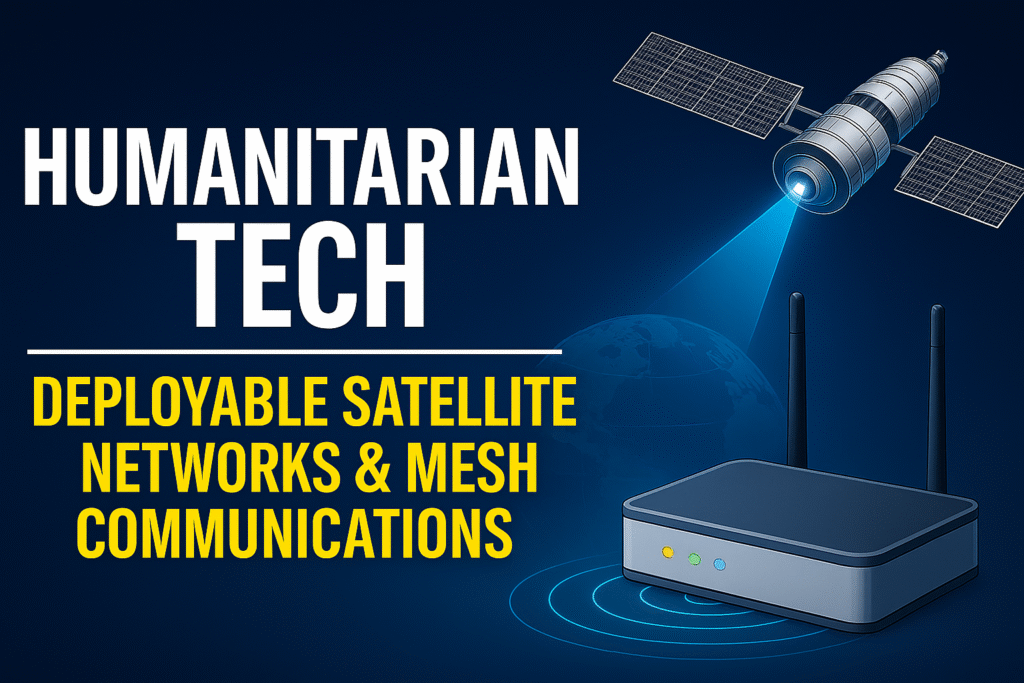
🛰️ What Are Deployable Satellite and Mesh Networks?
When disaster strikes, conventional communication grids often fail. Deployable networks are portable, fast-to-set-up systems that bring connectivity directly to the field — independent of existing infrastructure.
Here’s how they work:
- Deployable Satellite Networks: Portable satellite terminals connect users directly to orbiting constellations, offering instant access to voice and data services, even in remote regions.
- Mesh Networks: A group of small, wireless nodes automatically link together to create a self-healing local network. If one node goes offline, data reroutes through others — keeping the system functional without a central hub.
- Hybrid Systems: Combining both, responders use mesh nodes to cover local areas and satellite links for backhaul, ensuring reliable communication between field teams and command centers.
These networks act as “emergency lifelines,” restoring communication channels for governments, NGOs, and communities during critical operations.
Read Also This: 💾 Storage Hierarchies of Tomorrow: The Future Beyond SSDs and the Rise of 5D Data Storage
🚨 How These Systems Save Lives in Disaster Zones
1. Rapid Response and Command Coordination
When disaster strikes, command teams need instant communication to direct rescue missions. Satellite terminals can be deployed within minutes to connect field teams with emergency headquarters, enabling real-time tracking, mapping, and logistics coordination.
2. Enabling Field Operations
Rescue teams rely on mesh networks to maintain contact across rough terrain or dense urban environments where radio signals struggle. Each node strengthens the network, ensuring uninterrupted communication for medics, drone operators, and first responders.
3. Reconnecting Communities
Beyond emergency teams, deployable networks reconnect civilians — letting families contact loved ones, access relief information, and reach humanitarian services. In refugee camps, mesh Wi-Fi zones have become digital gathering points for communication and education.
4. Delivering Critical Data and Insights
Modern satellite constellations don’t just connect — they observe. High-resolution imagery, weather analysis, and terrain data help responders assess damage, predict hazards, and plan safer routes in real time.
⚙️ Key Benefits for Humanitarian Response
- Infrastructure Independence: No reliance on ground networks or fiber connections.
- Instant Deployment: Portable, modular kits can be set up in under an hour.
- Wide Coverage: Combined satellite-mesh setups can cover entire regions or camps.
- Scalable Systems: From single emergency teams to nationwide crisis recovery operations.
- Reliable in Any Condition: Works through storms, floods, and power outages.
In short — these technologies provide a digital safety net that doesn’t collapse when everything else does.
⚠️ Challenges to Overcome
Even as humanitarian tech evolves, challenges remain:
- Cost and Accessibility: Satellite bandwidth and equipment remain expensive, limiting availability for smaller NGOs.
- Power Supply: Sustaining networks in off-grid areas demands renewable or backup energy solutions.
- Standardization Issues: Different mesh protocols and hardware can cause interoperability problems between organizations.
- Training Gaps: Field teams must be equipped to deploy, secure, and maintain systems effectively.
- Data Privacy: Sensitive information must be encrypted to protect vulnerable populations.
These challenges are being tackled through collaboration among governments, private tech firms, and international aid networks, ensuring connectivity reaches those who need it most.
🔭 The Future: Smarter, Smaller, and More Sustainable
By 2030, humanitarian networks will look dramatically different:
- Miniaturized Terminals: Handheld satellite and mesh devices enabling one-person setup.
- AI-Powered Networks: Systems that self-optimize based on terrain, traffic, and weather.
- LEO Satellite Integration: Low-Earth Orbit networks like Starlink and OneWeb will provide faster, cheaper global coverage.
- Green Operations: Solar-powered mesh nodes and energy-efficient terminals reducing emissions and dependency on fuel.
- Community-Led Deployments: Local responders and citizens will be trained to operate rapid-connect systems long before foreign aid arrives.
Connectivity will no longer be an afterthought — it will be the foundation of modern disaster management.
✅ Final Thoughts
In the face of disaster, communication is more than a convenience — it’s survival. Deployable satellite networks and mesh communication systems are redefining how aid organizations operate, connecting people when every second counts.
They enable better coordination, faster rescue, and emotional relief for families torn apart by crisis. In every sense, humanitarian technology proves that connection itself is a form of compassion.
The future of disaster response isn’t just boots on the ground — it’s networks in the sky.
🔍 Frequently Asked Questions (FAQ)
1. What are deployable satellite networks, and why are they essential during disasters?
Answer:
Deployable satellite networks are portable communication systems that connect directly to orbiting satellites, providing instant voice and data services. They’re crucial in disaster zones because they work independently of ground infrastructure — enabling emergency teams to coordinate and share critical information even when local cell towers and fiber networks are destroyed.
2. How do mesh communication systems help in disaster response?
Answer:
Mesh networks consist of small wireless nodes that connect directly to each other, forming a self-healing web of connectivity. If one node goes offline, the network automatically reroutes data through others. This decentralized structure ensures first responders, medics, and communities remain connected in rugged or damaged environments where centralized networks fail.
3. Can these technologies provide internet access to affected civilians?
Answer:
Yes. Hybrid systems that combine satellite backhaul with local mesh Wi-Fi can deliver temporary internet access to civilians in disaster zones. This allows families to contact loved ones, access emergency alerts, and connect with humanitarian agencies — turning connectivity into a form of relief aid itself.
4. What challenges exist in deploying these systems during emergencies?
Answer:
Key challenges include logistics (transporting equipment into remote areas), high operational costs, power limitations, and compatibility between different network systems. Additionally, training responders to use and maintain these technologies effectively is vital for maximizing their impact in crisis conditions.
5. What does the future hold for humanitarian connectivity technologies?
Answer:
By 2030, expect more compact, solar-powered devices, seamless integration with Low-Earth Orbit (LEO) satellite constellations, and AI-driven network management. These innovations will make emergency communication faster, more affordable, and accessible — ensuring no disaster-affected area remains disconnected from the world.

Azeem Aosaf is a visionary entrepreneur, digital strategist, and educator with a mission to empower individuals through online earning and digital innovation. As the CEO of HelixNex LLC, he leads multiple ventures across e-commerce, education, and fintech—helping people turn their digital skills into sustainable income. Through his educational initiative RankTrak, Azeem has trained hundreds of students in SEO, YouTube Automation, Freelancing, and AI-powered marketing. His work bridges technology and opportunity—creating a platform where learning meets real-world success. When he’s not mentoring students or building digital products, Azeem shares insights on entrepreneurship, marketing trends, and financial freedom through his blogs and social platforms. His core belief: “Your Growth, Our Mission.”