The UK’s EV Revolution Is Accelerating
Electric vehicles are no longer a niche product — they’ve officially gone mainstream in Britain. In 2025, UK electric vehicle (EV) sales have reached unprecedented levels, marking a turning point in the nation’s transition toward cleaner mobility.
As government targets tighten and automakers flood the market with new models, EVs are rapidly becoming the default choice for UK buyers. The data shows that this isn’t a slow shift — it’s a revolution already underway.
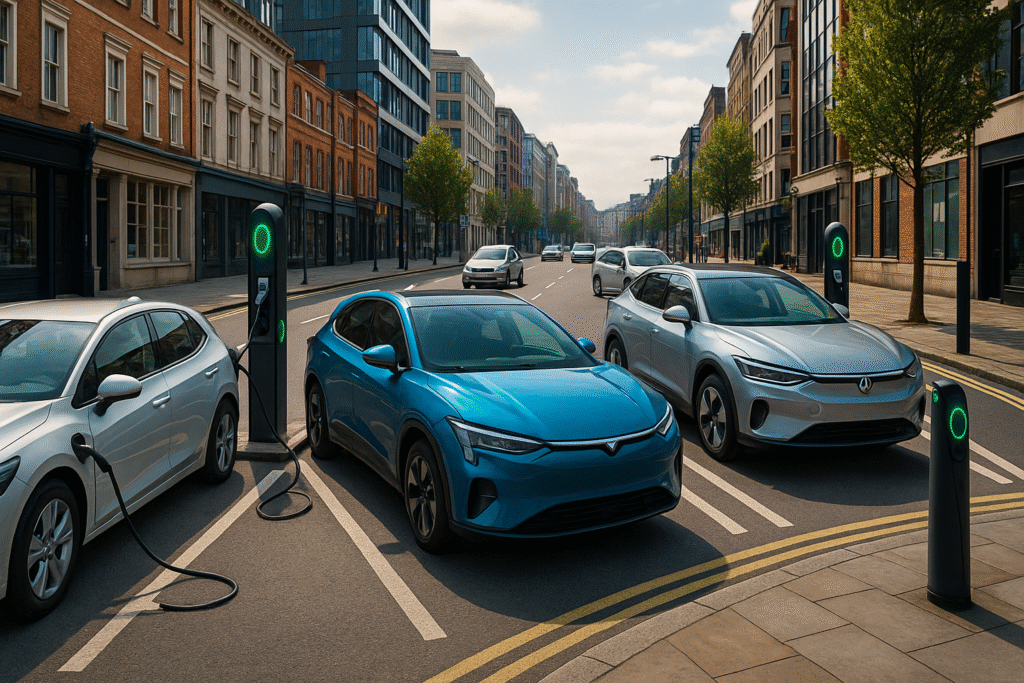
EV Sales Hit All-Time Highs
📊 Record-Breaking Growth
The latest figures show that battery-electric vehicles (BEVs) are capturing nearly one in four new car sales in the UK — a huge leap from the previous year.
Industry estimates reveal that:
- Over 440,000 electric cars are expected to be registered in 2025.
- This accounts for roughly 24% of total new car sales, compared with 19% in 2024.
- Cumulatively, more than 1.7 million fully electric cars are now on UK roads.
This surge demonstrates that the electric transition is accelerating far faster than many experts predicted even two years ago.
Read Also This: 🚘 Aston Martin Cuts £300 Million Investment After Global Headwinds Shake the Auto Market
Why UK Drivers Are Embracing EVs
Several key factors are fueling the UK’s electric boom — from policy pressure to consumer awareness and tech innovation.
1. ⚙️ Wider Model Range & Competitive Pricing
Manufacturers from across the globe — including Tesla, Kia, Hyundai, BYD, and now Changan — are flooding the UK market with EVs in all shapes and sizes. From budget hatchbacks to luxury SUVs, the variety gives drivers more choice than ever.
Prices are also gradually falling, with several new models launching below £30,000, making EV ownership more accessible to average families.
2. 🔋 Better Batteries & Range Confidence
Battery technology has made major strides. Modern EVs now deliver 250–350 miles of range on a single charge, and fast-charging stations can top up 80% of the battery in under 30 minutes.
This improved convenience is reducing “range anxiety” — long the biggest barrier for potential buyers.
3. ⚡ Rapid Expansion of Charging Infrastructure
The UK now has over 60,000 public charging points, including thousands of rapid and ultra-rapid chargers. Supermarkets, motorway services, and local councils continue to roll out new installations every month.
The rise of home charging incentives has also helped boost adoption among homeowners.
4. 💰 Lower Running Costs
Even as energy prices fluctuate, EVs remain significantly cheaper to run than petrol or diesel cars. With fewer moving parts and no oil changes, maintenance costs are typically 30–40% lower, while electricity remains a cheaper energy source than fuel.
5. 🌱 Climate Awareness & Government Policies
Public concern about emissions, coupled with the UK’s Zero Emission Vehicle (ZEV) mandate, has made electric adoption not only popular but inevitable. Automakers are required to ensure that a growing percentage of their sales come from zero-emission vehicles — pushing the market to electrify faster.
What the EV Boom Means for Britain
🚗 For Consumers
The EV revolution means drivers now enjoy:
- More choice at different price points.
- Lower lifetime costs and better warranties.
- Advanced technology — from smart infotainment to autopilot features.
For the first time, buying an electric car is not just about being eco-friendly — it’s about getting better value.
🏭 For the Auto Industry
Car manufacturers and dealerships are racing to electrify. Production lines are shifting from internal combustion to electric platforms, while dealerships are training technicians to handle high-voltage systems.
Even traditional brands like Ford, BMW, and Volkswagen are investing billions in UK EV operations to stay competitive.
🌍 For the Environment
The environmental benefits are undeniable. The surge in EV adoption means lower tailpipe emissions, reduced urban air pollution, and significant progress toward the UK’s Net Zero 2050 goal.
Still, the challenge now lies in ensuring the electricity powering these EVs comes from renewable sources and that batteries are responsibly recycled.
Challenges on the Road Ahead
Despite the record-breaking growth, several issues must still be tackled before the UK can claim full EV maturity.
1. 🏠 Charging Access for Everyone
Many households, especially those without driveways, still struggle to install home chargers. Expanding on-street and community charging is crucial for equitable adoption.
2. 💸 Upfront Cost
While running costs are lower, initial purchase prices remain higher than comparable petrol models. The government’s withdrawal of plug-in grants has made affordability an ongoing concern.
3. 🧾 Private Buyer Hesitation
A large share of EV sales currently come from fleet and business buyers who benefit from tax breaks. Encouraging more private drivers to switch will be key to sustaining growth.
4. ⚠️ ZEV Mandate Targets
The government’s Zero Emission Vehicle (ZEV) target calls for 28% of new car sales to be zero-emission in 2025. While the current trajectory is close, missing the target could trigger regulatory penalties for manufacturers.
What’s Next for the UK EV Market
The next 12–24 months will define the UK’s EV trajectory. Experts expect several major trends to shape the market:
- Arrival of affordable small EVs from brands like MG, Renault, and BYD.
- Growth of second-hand EV sales, making electric mobility accessible to even more people.
- Ultra-fast charging hubs along major motorways to enable long-distance travel.
- Battery recycling and reuse programs to build a sustainable supply chain.
- Corporate electrification — fleets, delivery services, and taxis going 100% electric.
The Bottom Line
The UK’s electric vehicle market has reached a milestone that many thought was still years away. EVs are no longer futuristic — they’re firmly part of the mainstream automotive scene.
With improving infrastructure, competitive pricing, and stronger public confidence, 2025 may well be remembered as the year Britain truly switched on to electric mobility.
Still, challenges remain. From affordability to equitable charging access, the next phase of growth will depend on collaboration between automakers, government, and consumers.
But one thing is certain: the electric era is no longer coming — it’s already here.
🔍 Frequently Asked Questions (FAQ)
Q1: What percentage of new cars sold in the UK in 2025 are electric?
A1: As of 2025, fully electric vehicles account for around 24% of new car registrations, up from about 19% in 2024.
Q2: How many EVs are now on UK roads?
A2: Over 1.7 million fully electric vehicles are currently registered across the country, with that number rising monthly.
Q3: What is driving the increase in EV adoption?
A3: The surge is fueled by lower running costs, improved charging networks, better battery range, and growing environmental awareness.
Q4: Are EVs cheaper to run than petrol cars?
A4: Yes. EVs typically cost 60–70% less per mile to operate, and maintenance costs are significantly lower due to fewer moving parts.
Q5: What are the main challenges for EV growth in the UK?
A5: Key challenges include high upfront prices, charging access for flat dwellers, and the need for faster expansion of public charging stations.

Azeem Aosaf is a visionary entrepreneur, digital strategist, and educator with a mission to empower individuals through online earning and digital innovation. As the CEO of HelixNex LLC, he leads multiple ventures across e-commerce, education, and fintech—helping people turn their digital skills into sustainable income. Through his educational initiative RankTrak, Azeem has trained hundreds of students in SEO, YouTube Automation, Freelancing, and AI-powered marketing. His work bridges technology and opportunity—creating a platform where learning meets real-world success. When he’s not mentoring students or building digital products, Azeem shares insights on entrepreneurship, marketing trends, and financial freedom through his blogs and social platforms. His core belief: “Your Growth, Our Mission.”