If you like your two-wheeler to feel like it’s got a comfy armchair under you while whispering “relax” on long straights, the Bajaj Avenger Cruise 220 is a bike you should meet. It’s a proper small-capacity cruiser that blends easygoing ergonomics with a rev-happy 220 cc heart — ideal for relaxed city jaunts and mellow highway cruises. The Avenger Cruise 220 keeps things simple: classic cruiser styling, a low seat, peg-forward stance, and an engine tuned more for torque and feel than for drag-strip bragging rights.
The bike’s core mechanical specs — a 220 cc oil-cooled, twin-spark DTS-i engine making about 19 PS with 17.55 Nm of torque — give it the personality of a small cruiser that wants to move along with composure rather than launch like a sportbike. Those official mechanical details underline what the Avenger is: comfortable, predictable, and tuned for real-world riding rather than headline horsepower.
Key Specs at a Glance
Engine & Performance
The Avenger Cruise 220 uses a single-cylinder, oil-cooled, twin-spark DTS-i engine with fuel injection. Peak output sits around 19.03 PS at high revs, and peak torque is in the 17.5–17.6 Nm ballpark. That means you get decent midrange shove for overtakes and enough rev-range to keep things interesting on open roads — but it’s not a torque monster; it’s a cruiser that wants a relaxed pace.
Fuel System & Transmission
Fuel injection keeps throttle response crisp and helps with refuelling efficiency and cold starting compared to older carburetted cruisers. The gearbox is a conventional multi-gear manual, suited to city crawling and steady highway cruising. Expect smooth up-and-down shifts and a powerband that rewards light revving rather than redlining.
Chassis, Suspension & Brakes
Bajaj gave the Avenger a stable wheelbase and cruiser geometry: telescopic front forks and a twin-shock rear (adjustable) setup that soaks up bumps while keeping the ride planted. Stopping power comes courtesy of a large front disc — a 280 mm rotor with ABS — and a rear drum. The front ABS and the disc give confidence in braking, especially in wet or unpredictable surfaces. Kerb weight sits in the mid-160 kg range, so the bike feels substantial but manageable.
Design & Styling: The Cruiser Look
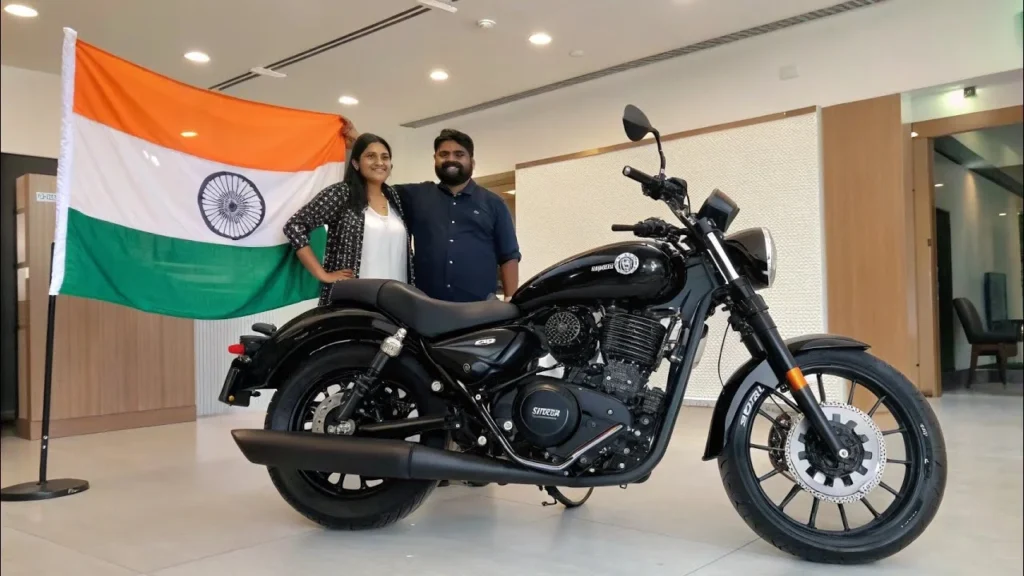
The Avenger Cruise 220 wears classic cruiser clothing: a long, low silhouette, a broad teardrop tank, upright handlebar with a laid-back reach, rounded headlamp and spoked wheels. It isn’t trying to reinvent the cruiser aesthetic — it’s embracing it. The design language is all about relaxed posture and visual calm: think lounge chair on two wheels rather than a jacked-up sport seat.
Low-Slung Profile & Ergonomics
The riding triangle — low seat, forward pegs, and pullback handlebar — is tuned for chill rides. You sit in the bike, not on it; your back stays neutral, and the weight is distributed for long-ride comfort. The saddle height is low enough for most riders to put both feet down at stops, which boosts confidence in city traffic and while parking.
Seat, Pillion & Comfort Details
Bajaj packs a cushioned pillion with a backrest option and a broad saddle that’s friendly for long hours. If you plan weekend two-up riding, the Avenger’s seating ergonomics will be appreciated: pillion comfort is better than many commuter bikes, and passenger grab rails and the optional backrest add to real-world usability.
Real-World Performance: City vs Highway
How it behaves in traffic
In town, the Avenger Cruise 220 is relaxed and forgiving. The gentle torque curve means you don’t need to hustle gears in stop-and-go; feather the clutch, slot a gear, and roll off. Its low seat and modest kerb weight make manoeuvring easy for a cruiser. If you want to zip through dense traffic, it won’t be as nimble as a 150 cc commuter, but for everyday urban commuting with a comfortable riding position, it’s more than capable.
Long-ride and touring behavior
On the highway, the Avenger is in its element. It settles into a steady pace and feels stable at typical cruising speeds. Don’t expect explosive acceleration, but you’ll get predictable overtakes and a comfortable posture that reduces rider fatigue — the kind of bike that turns multi-hour stretches into relaxed road meditation. Wind protection is modest (no tall touring screen on stock models), so consider a modest wind deflector if you regularly do high-speed highway stints.
Fuel Efficiency & Practical Range
The Avenger Cruise 220’s claimed mileage is around 40 kmpl, and with a 13-liter tank, you can realistically expect a 400+ km range under steady mixed riding conditions — a good number for weekend touring and fewer fuel stops on longer runs. Of course, real mileage depends on how you ride: aggressive riding and heavy two-up loads will drop economy; steady, relaxed cruising will maximize it.
Ride Comfort, Handling & Dynamics
Ride comfort is where the Avenger shines. The suspension tuning favors plushness: it eats most mid-size bumps and potholes with minimal jolt. Handling is predictable — wide-arc turns are comfortable, and the bike’s relaxed geometry means the Avenger doesn’t twitch or surprise you. Cornering speed is not its game; it’s about line stability and a confidence-inspiring feel that encourages smooth entries and exits rather than aggressive flicks.
Think of the Avenger like a well-set lounge armchair that can go around corners: comfortable, secure, and not trying to be sporty. If you’re imagining leaning it over like a sportbike, you’ll be disappointed; but if you picture carving long sweeps with a grin, that’s the Avenger’s vibe.
Safety Features & Braking Performance
Safety in real life is about predictability. The Avenger’s front 280 mm disc with ABS is an important safety asset — it shortens stopping distances and prevents wheel lockup in emergencies, especially on slick roads. The rear drum might feel old-school, but paired with the ABS-equipped front disc and sensible chassis setup, the Avenger gives a steady and controlled braking feel for everyday riders.
Maintenance, Service & Running Costs
Service intervals & common checks
Bajaj’s service network is extensive in India, which is a practical benefit for riders who don’t want to hunt for parts or service centers. Routine servicing — oil changes, valve checks, chain care, brake inspections — is relatively straightforward thanks to a simple engine layout and common parts. You’ll find parts are affordable compared to premium foreign brands, which keeps yearly running costs reasonable.
Typical ownership costs
Expect maintenance costs to be closer to the commuter/ mainstream segment than to heavyweight cruisers: consumables (tyres, brake pads, chains) and periodic servicing are reasonably priced. Insurance, servicing and consumable replacement will be the main recurring expenses — and because the Avenger is a popular model, aftermarket parts and accessories remain widely available and affordable.
Accessories, Customization & Useful Mods
Cruisers are fun to personalize. Popular mods for the Avenger Cruise 220 include:
- Small windshields for better highway comfort
- Comfort seats or gel pads for very long rides
- Luggage racks and saddlebags for touring
- Handlebar risers or different grips to fine-tune the riding triangle
- Visual mods like chrome trims, custom paint, or subtle LED upgrades
Keep in mind that heavy cosmetic or mechanical modifications can affect warranty and resale value — choose mods that add comfort or utility first.
Competitors: Where Avenger Cruise 220 Stands
In the sub-250 cc cruiser and relaxed-street segment, the Avenger’s main strengths are affordability, a comfortable ride, and a manufacturer service network. It competes with other value-focused cruisers and retro-styled bikes — machines that prioritize look and comfort over outright performance. The Avenger typically undercuts larger retro cruisers on price while delivering efficient running costs and low barrier-to-entry ownership.
Who Should Buy the Avenger Cruise 220?
Ask yourself: do you want a bike that’s comfortable for long rides, easy to live with in the city, and modest on running bills? Do you prioritize the cruiser look and relaxed ergonomics over blistering acceleration? If yes, the Bajaj Avenger Cruise 220 is aimed at you.
Ideal buyers include:
- New riders who want a forgiving cruiser feel
- Commuters who value comfort and presence on the road
- Weekend tourers who want decent range and relaxed ergonomics
- Riders who want cruiser aesthetics without premium cruiser pricing
Tips for Test Rides & What to Inspect Before Buying
When you test ride an Avenger Cruise 220 (or any used example), check:
- Smooth idling and crisp throttle response
- No unusual engine noises or excessive vibrations at cruising rpm
- Suspension travel — push down to check for any clunks or leaks
- Brakes — front lever feel and ABS activation
- Alignment and wheel/truing — spoked wheels should be straight
- Service history and parts replaced
If buying used, check for aftermarket engine work (which may compromise reliability) and ensure the vehicle has a clean title and service book.
Pros & Cons — Quick Summary
Pros
- Comfortable cruiser ergonomics for long rides
- Efficient 220 cc powertrain with fuel injection
- Strong manufacturer backing and service network
- Good real-world fuel range thanks to a 13 L tank
- Front disc with ABS for added safety
Cons
- Not a performance bike — pace is relaxed by design
- Rear drum brake feels dated compared to dual-disc setups
- Minimal wind protection on stock models for high-speed touring
- If you want aggressive cornering, this isn’t the pick
Conclusion
The Bajaj Avenger Cruise 220 is a practical, approachable cruiser that’s made for riders who prefer a laid-back life on two wheels. It’s less about lap times and more about lounging over long roads: comfy seating, a friendly torque curve, and sensible fuel efficiency make it a reliable companion for city commutes and weekend escapes. For its price and category, the Avenger offers a compelling blend of style, comfort, and economy — especially if you value cruiser ergonomics without premium cruiser maintenance bills or complexity. If you want a simple, low-stress cruiser that’s easy to live with every day, the Avenger Cruise 220 deserves a long, careful look.
FAQs
Q1: What is the engine power and torque of the Bajaj Avenger Cruise 220?
The Avenger Cruise 220 is powered by a 220 cc single-cylinder oil-cooled twin-spark DTS-i engine that produces around 19.03 PS of power and approximately 17.55 Nm of torque.
Q2: What mileage can I expect from the Avenger Cruise 220?
Claim figures put the Avenger around 40 kmpl under ideal conditions; real-world numbers vary but remain efficient for a cruiser.
Q3: Does the Avenger Cruise 220 have ABS?
Yes — the Avenger Cruise 220 features a 280 mm front disc with ABS, paired with a rear drum brake.
Q4: Is the Avenger Cruise 220 good for two-up touring?
Yes, for moderate two-up touring it’s a strong candidate thanks to its comfortable saddle, pillion backrest options, and relaxed ergonomics.
Q5: How much does the Avenger Cruise 220 cost (ex-showroom)?
The Avenger Cruise 220’s ex-showroom price starts in the ₹1.47 lakh range, though prices vary by state and dealer.

Azeem Aosaf is a visionary entrepreneur, digital strategist, and educator with a mission to empower individuals through online earning and digital innovation. As the CEO of HelixNex LLC, he leads multiple ventures across e-commerce, education, and fintech—helping people turn their digital skills into sustainable income. Through his educational initiative RankTrak, Azeem has trained hundreds of students in SEO, YouTube Automation, Freelancing, and AI-powered marketing. His work bridges technology and opportunity—creating a platform where learning meets real-world success. When he’s not mentoring students or building digital products, Azeem shares insights on entrepreneurship, marketing trends, and financial freedom through his blogs and social platforms. His core belief: “Your Growth, Our Mission.”