A Worldwide Surge in Electric Innovation
The global automotive market is experiencing one of its fastest transformations yet.
Across North America, Europe, and Asia, a new generation of electric vehicles (EVs) is hitting the roads — from affordable urban commuters to luxury performance SUVs.
As EV technology matures and governments tighten emissions rules, carmakers are pushing to offer more choices at more price points. The result: an increasingly diverse lineup that brings electric mobility closer to the mainstream driver.
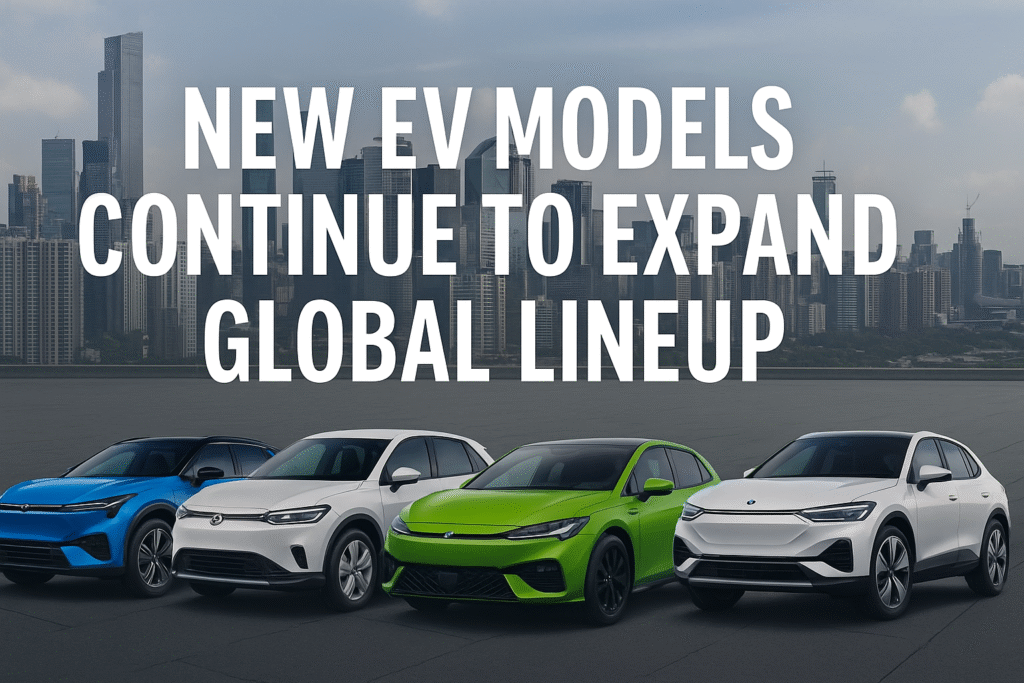
⚙️ New Electric Models Powering the Market Shift
Dozens of fresh electric cars are joining the global stage, and here are some of the most talked-about launches shaping the next chapter in EV adoption:
| Model | Category / Region | Highlights |
|---|---|---|
| Mazda EZ-60 | Mid-size crossover, China & export markets | Blends a long-range EV setup with an optional range extender, offering up to 620 km on a single charge. |
| Kia EV4 | Compact EV, Europe & Asia | The brand’s new entry-level electric model under the E-GMP platform, designed for affordability and performance balance. |
| MG4 2025 Edition | Compact hatchback | Features a refreshed design, upgraded battery tech, and smarter driver assistance systems. |
| Maruti Suzuki eVitara | SUV for India & export | India’s most anticipated EV, set for global exports to over 100 countries; multiple battery options expected. |
| Tesla Model Y Standard | Entry SUV, Europe | A budget-friendly version aimed at mass-market adoption with a focus on efficiency and practicality. |
| BMW iX3 Neue Klasse | Premium SUV, Global | Built on BMW’s next-gen EV platform, promising fast charging and solid-state battery readiness. |
| Nio Firefly | Compact hatchback, China & EU | A small EV with battery-swapping capability, targeting younger, urban buyers in expanding markets. |
This expansion proves that EVs are no longer niche — they’re tailored to every segment, from first-time buyers to enthusiasts seeking high performance.
🔋 Why EV Variety Is Growing So Rapidly
Four main forces are driving this global EV boom:
- Battery breakthroughs – Advances in cell efficiency and production have slashed costs and improved performance.
- Government incentives – Nations are promoting electrification with subsidies, tax breaks, and stricter CO₂ standards.
- Infrastructure upgrades – Expanding fast-charging networks make EV ownership easier and more practical.
- Consumer mindset shift – More drivers now view EVs as reliable, stylish, and cost-effective alternatives to gasoline cars.
Automakers are responding by localizing models, designing EVs that fit specific regional needs, from urban mobility in Asia to long-range touring in Europe and the U.S.
Read Also This: Goldman Sachs Slashes U.S. Auto Sales Forecast as Tariffs Drive Up Costs
⚠️ Challenges Along the Road Ahead
Despite rapid growth, EV expansion faces several hurdles that could influence the pace of adoption:
- Battery supply risks: Sourcing critical materials like lithium and nickel remains a challenge.
- Charging disparities: Urban centers are well covered, but rural areas still lag behind.
- Cost pressure: Manufacturers must balance affordability with profitability as competition tightens.
- Policy uncertainty: Shifting subsidies and tax structures could impact future pricing strategies.
- Market saturation risk: With so many EVs entering the field, automakers must work harder to stand out.
🚀 What’s Next: The 2026 Wave
By 2026, expect to see:
- Compact EVs under $25,000 hitting more markets.
- New battery technologies like semi-solid and immersion-cooled packs entering production.
- Software-defined vehicles offering over-the-air performance and personalization upgrades.
- Electric vans and trucks designed for logistics, not just passengers.
- Stronger competition from emerging automakers, especially from China, India, and Eastern Europe.
✅ The Big Picture
The message is clear — the electric revolution is not slowing down.
Every new launch, every regional adaptation, and every infrastructure upgrade signals a future where electric mobility becomes the global standard.

Azeem Aosaf is a visionary entrepreneur, digital strategist, and educator with a mission to empower individuals through online earning and digital innovation. As the CEO of HelixNex LLC, he leads multiple ventures across e-commerce, education, and fintech—helping people turn their digital skills into sustainable income. Through his educational initiative RankTrak, Azeem has trained hundreds of students in SEO, YouTube Automation, Freelancing, and AI-powered marketing. His work bridges technology and opportunity—creating a platform where learning meets real-world success. When he’s not mentoring students or building digital products, Azeem shares insights on entrepreneurship, marketing trends, and financial freedom through his blogs and social platforms. His core belief: “Your Growth, Our Mission.”