From Machines to Digital Platforms
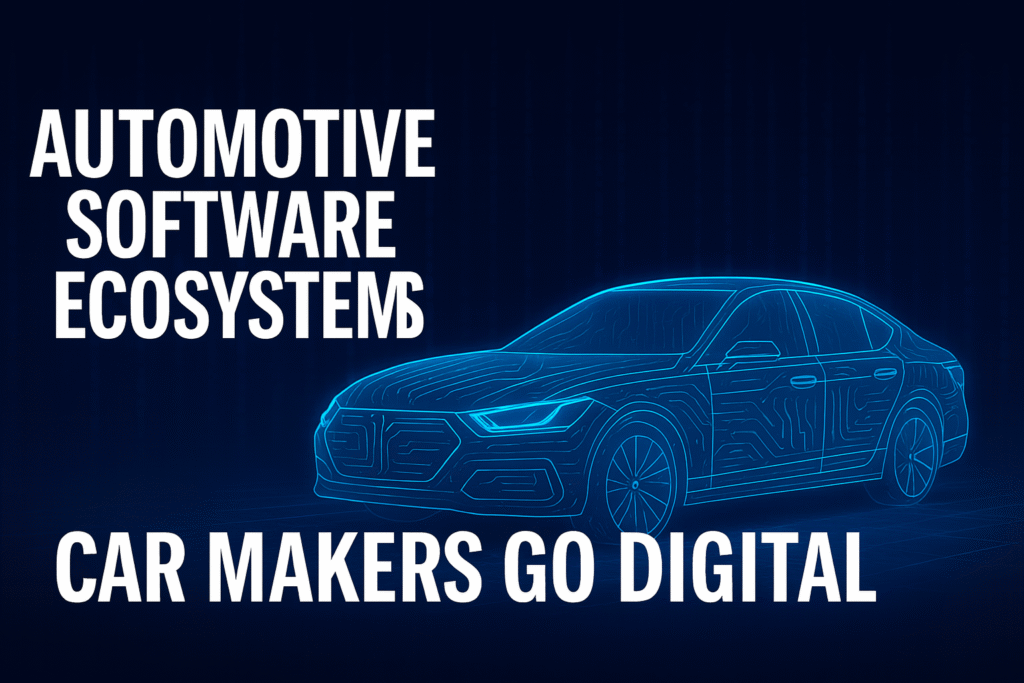
The automotive industry is entering a new chapter — one where vehicles are no longer just products, but intelligent, connected platforms.
Instead of focusing solely on horsepower or design, car makers are now competing in software, data, and digital ecosystems.
This transformation is reshaping the very foundation of the automotive business — creating opportunities for new revenue models and continuous customer engagement.
⚙️ Why Automakers Are Shifting to Software Ecosystems
For decades, car manufacturers earned profits mainly from hardware — selling vehicles and replacement parts. That model is changing fast.
As electric and connected cars become the norm, automakers are realizing that long-term value now lies in software and services, not just metal and engines.
Some key drivers behind this shift include:
- Recurring revenue potential: Software updates, in-car subscriptions, and connected services can generate income long after the car leaves the showroom.
- Customization & personalization: Software enables automakers to tailor experiences to individual drivers — from entertainment to driving modes.
- Continuous improvement: Cars can now evolve through over-the-air (OTA) updates, keeping vehicles modern and feature-rich for years.
- Data-driven insights: Connected vehicles produce massive amounts of data that can be used to improve safety, optimize performance, and enable predictive maintenance.
Read Also This: General Motors Boosts 2025 Forecast as Tariff Pressures Ease
🚀 The Rise of the Software-Defined Vehicle (SDV)
The Software-Defined Vehicle (SDV) is the cornerstone of this transformation.
In an SDV, the majority of the vehicle’s features — from engine performance to infotainment — are controlled by centralized software platforms instead of dozens of isolated electronic modules.
Key Benefits:
- Fewer physical components: Replacing hundreds of ECUs (electronic control units) with a few high-performance chips.
- Scalable platforms: Manufacturers can add new features through simple software updates.
- Unified operating systems: A single software layer controls multiple functions, simplifying development and maintenance.
- Future-proofing: Vehicles can adapt to new technologies without redesigning hardware.
This architecture allows automakers to behave more like tech companies, where innovation happens through code rather than physical redesign.
🌐 How Car Makers Are Becoming Tech Platforms
1. Developing In-House Software Divisions
Automakers are building specialized teams to create their own operating systems, cloud platforms, and apps.
Brands like Mercedes, Volkswagen, and Hyundai have launched dedicated software units to reduce dependence on suppliers and compete with tech-first players like Tesla.
2. Creating Vehicle App Ecosystems
Just as smartphones have app stores, cars are now getting their own.
Owners can download navigation upgrades, driver assistance tools, or entertainment features — often for a subscription or one-time fee.
3. Collaborating with Tech Partners
Partnerships with cloud providers and chipmakers — such as Qualcomm, Google, and Nvidia — are helping car companies deploy scalable digital ecosystems and next-gen infotainment systems.
4. Monetizing Vehicle Data
Connected vehicles continuously transmit performance and usage data.
Automakers use this information to optimize services, predict maintenance needs, and improve fleet operations — while ensuring data privacy for consumers.
🧩 The Challenges on the Road Ahead
The shift from hardware to software-first operations isn’t without obstacles.
Automakers must address several critical challenges to realize the full potential of this digital transformation:
- Legacy systems: Traditional production models weren’t built for rapid software iteration.
- Talent shortage: Automotive companies need software engineers, data scientists, and AI specialists — not just mechanical designers.
- Cybersecurity risks: As vehicles become connected devices, they’re also potential targets for hacking.
- Business model tension: Some consumers may resist paying monthly fees for software-enabled features they once got for free.
- Ecosystem complexity: Balancing open innovation with proprietary platforms requires careful strategy.
🔮 What’s Next for Automotive Software (2026–2030)
The next five years will be pivotal for software-driven mobility:
- 2026–2027: More vehicles will adopt unified software platforms supporting OTA updates and real-time cloud integration.
- 2028–2029: App-based ecosystems become mainstream, enabling users to customize their cars with downloadable features.
- 2030 and beyond: Fully software-defined vehicles dominate the market, offering continuous upgrades and subscription-based experiences.
By the end of the decade, the line between automotive engineering and technology development will blur entirely.
Car makers will evolve into mobility tech platforms — delivering services, updates, and intelligence long after the initial sale.
✅ Final Thoughts
The race is no longer about who builds the fastest car — but who builds the smartest one.
Automotive giants are transitioning into digital ecosystems, where every vehicle is a connected platform, every driver is a subscriber, and every mile generates data.
The future belongs to automakers that can combine engineering heritage with software innovation — turning cars into dynamic, updatable, and intelligent machines.

Azeem Aosaf is a visionary entrepreneur, digital strategist, and educator with a mission to empower individuals through online earning and digital innovation. As the CEO of HelixNex LLC, he leads multiple ventures across e-commerce, education, and fintech—helping people turn their digital skills into sustainable income. Through his educational initiative RankTrak, Azeem has trained hundreds of students in SEO, YouTube Automation, Freelancing, and AI-powered marketing. His work bridges technology and opportunity—creating a platform where learning meets real-world success. When he’s not mentoring students or building digital products, Azeem shares insights on entrepreneurship, marketing trends, and financial freedom through his blogs and social platforms. His core belief: “Your Growth, Our Mission.”