A Supply Shock Hits Ford’s Truck Business
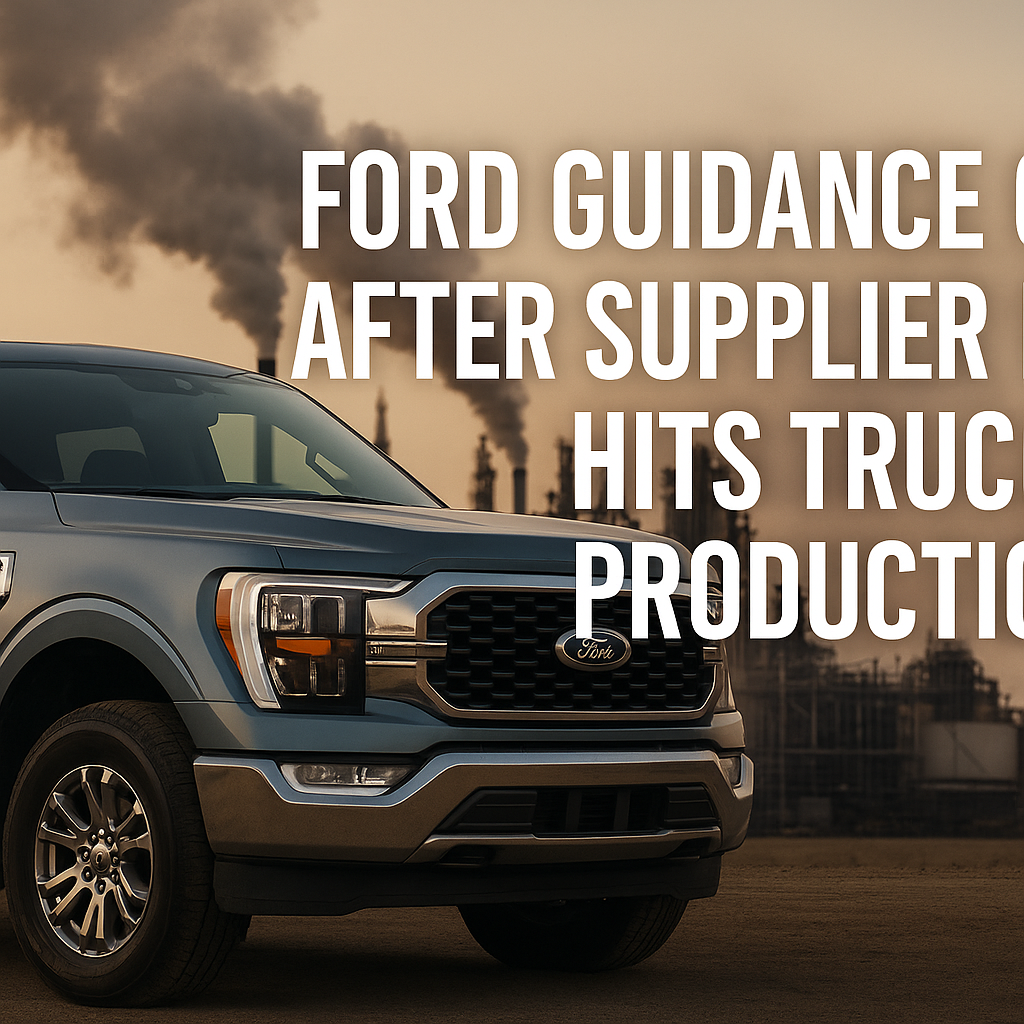
Ford Motor Company has lowered its 2025 profit forecast after a fire at a key aluminum supplier disrupted the production of its top-selling pickup trucks. The blaze broke out in mid-September at Novelis’s Oswego, New York facility, a major source of aluminum panels used in Ford’s F-Series and Super Duty trucks.
Although no employees were injured, the damage forced a partial shutdown, interrupting shipments and putting Ford’s most profitable vehicles under pressure.
⚙️ Revised Guidance and Financial Impact
Ford now expects full-year adjusted operating earnings between $6.0 billion and $6.5 billion, down from its previous target of up to $7.5 billion. The company estimates the fire will trim as much as 100,000 vehicle units from 2025 production and cost roughly $1.5 billion to $2 billion in lost profits.
Despite this setback, Ford’s third-quarter revenue reached about $50 billion, a 9 percent increase over last year. Analysts noted that the company’s quick response and healthy retail demand for trucks and SUVs have softened the blow.
🏭 How Ford Is Managing the Disruption
To limit the fallout, Ford is taking several immediate actions:
- Alternative sourcing: The company is working with Novelis and other suppliers to restore aluminum flow from unaffected facilities.
- Production re-allocation: Priority is being given to higher-margin trucks and SUVs, ensuring dealerships continue receiving Ford’s most in-demand models.
- Insurance recovery: Ford expects to recoup part of its financial losses through supplier insurance and future quarters’ performance.
- Operational flexibility: Manufacturing teams are adjusting schedules and exploring temporary material substitutes to maintain output where possible.
These steps highlight Ford’s broader effort to build supply-chain resilience following years of disruptions—from pandemic shortages to logistics constraints.
Also Read this Automotive Industry Buzz 2025: The Fast-Changing World of Mobility
📉 Why This Matters for Investors and Customers
For Investors
The guidance cut signals a near-term profitability dip but not a collapse in fundamentals. Ford remains profitable, with truck and commercial vehicle demand staying robust. Analysts suggest the event underscores the need for diversified supplier networks rather than deep structural weaknesses.
For Consumers
Buyers may face limited availability or longer wait times for certain F-Series configurations through early 2026. However, Ford dealers are expected to receive adequate stock of standard models, while premium variants may be temporarily constrained.
🌎 Lessons for the Auto Industry
The Novelis incident underscores how a single supplier can become a bottleneck for a global automaker. As vehicles incorporate more advanced materials—like high-strength aluminum and composite structures—manufacturers must balance innovation with risk mitigation.
Ford’s rapid response could serve as a case study in crisis management, illustrating the value of flexible contracts, multiple suppliers, and real-time logistics visibility.
✅ The Road Ahead
Ford’s management remains confident about long-term growth, especially as demand for hybrid and high-efficiency trucks continues to rise. The company plans to ramp up production in 2026 to recover lost volume and reaffirm its position as a leader in North American pickup sales.
“This isn’t a step back — it’s a speed bump,” one executive said. “Our core products remain strong, and our customers’ trust keeps us moving forward.”
🔍 Frequently Asked Questions (FAQ)
1. Why did Ford lower its 2025 profit forecast?
Ford reduced its 2025 profit outlook because a fire at its aluminum supplier’s plant in Oswego, New York disrupted production of its best-selling pickup trucks. The supply interruption affected manufacturing volumes and increased material costs, prompting the company to adjust its financial guidance.
2. How much financial impact is Ford expecting from the supplier fire?
The company estimates the disruption could cost between $1.5 billion and $2 billion in 2025 profits and result in a loss of up to 100,000 vehicle units. However, Ford plans to recover some of those losses in 2026 once normal production resumes.
3. Which vehicles are most affected by the disruption?
The incident primarily affects the F-Series and Super Duty pickups, which use aluminum body panels sourced from the damaged supplier plant. These models are Ford’s most profitable vehicles, making the disruption especially significant to its bottom line.
4. What steps is Ford taking to manage the situation?
Ford is working with Novelis, the affected supplier, to restore operations as quickly as possible. It’s also securing aluminum from alternative suppliers, adjusting production schedules, and focusing on higher-margin models to maintain profitability.
5. How does this event affect Ford customers?
Customers may experience longer wait times or limited availability for specific truck models over the next few months. However, Ford is prioritizing dealer shipments for its most popular configurations and expects production to stabilize by early 2026.
6. Does this incident change Ford’s long-term outlook?
Not significantly. While the short-term hit to earnings is notable, Ford remains confident in its core truck and hybrid strategy. The company plans to ramp up production in 2026 and reinforce its supply chain to prevent future disruptions.

Azeem Aosaf is a visionary entrepreneur, digital strategist, and educator with a mission to empower individuals through online earning and digital innovation. As the CEO of HelixNex LLC, he leads multiple ventures across e-commerce, education, and fintech—helping people turn their digital skills into sustainable income. Through his educational initiative RankTrak, Azeem has trained hundreds of students in SEO, YouTube Automation, Freelancing, and AI-powered marketing. His work bridges technology and opportunity—creating a platform where learning meets real-world success. When he’s not mentoring students or building digital products, Azeem shares insights on entrepreneurship, marketing trends, and financial freedom through his blogs and social platforms. His core belief: “Your Growth, Our Mission.”