The UK automotive landscape is undergoing a quiet revolution. Chinese automakers are no longer fringe players—they’re grabbing meaningful share, especially in the electrified segment (EVs, PHEVs, hybrids). With smart pricing, aggressive launches, and regulatory alignment, these brands are targeting the UK like never before.
Let’s dive into how this shift is happening, what’s driving it, and what it means for legacy automakers.
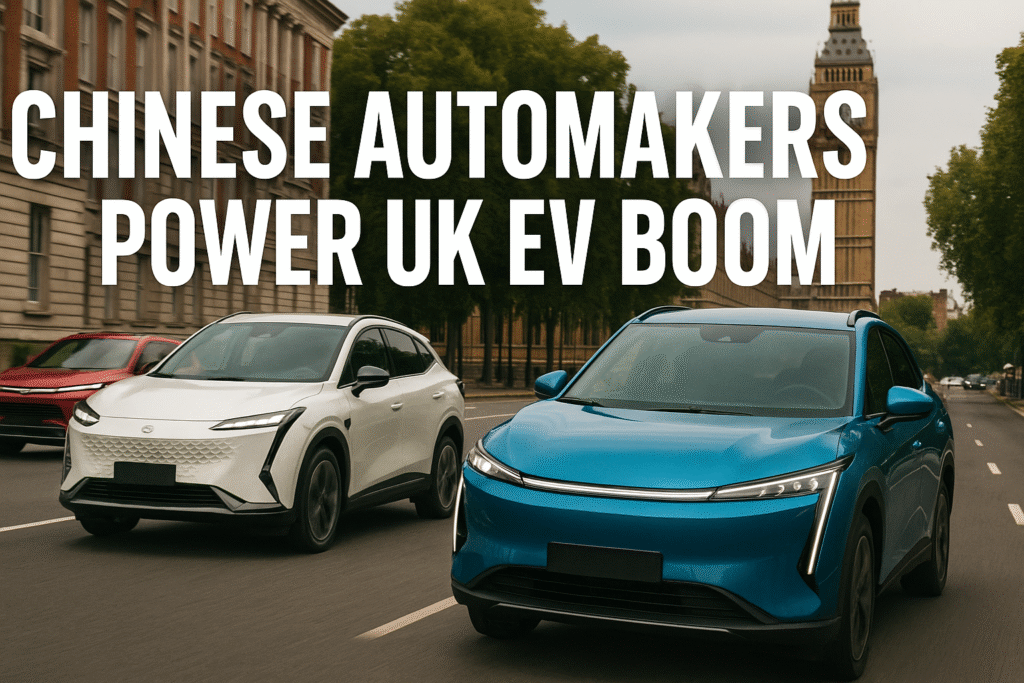
⚡ Chinese Brands Are Doubling Their Share—Thanks to Electrification
Chinese carmakers are making especially strong inroads in electrified vehicle registrations. In recent months:
- Chinese brands almost doubled their UK market share within the electrified segment—this includes EVs, plug-in hybrids, and hybrids.
- In September 2025 alone, Chinese auto brands captured 36% of the UK’s PHEV market, with models like the Jaecoo 7, MG HS, and others making the top-10 charts.
- BYD, in particular, became the UK’s second-largest electric vehicle seller behind Tesla in that same month, aided by its Sealion 7 SUV making the top-10 EV ranks.
These numbers reveal not just a surge in volume, but also a transformation in what customers are choosing—and what brands are offering.
🛠 Drivers Behind the Growth
What’s pushing Chinese brands forward in the UK? Several key factors are aligning:
1. Value-focused electrified models
Chinese automakers often offer EVs and hybrids with high specifications at lower prices than many mainstream European rivals. This ensures strong appeal to cost-conscious buyers.
Red Also This: Shelby Brings American Muscle to British Roads with Right-Hand-Drive Models
2. Matching local incentives
While not all Chinese models qualify for the UK’s Electric Car Grant (ECG), several brands are matching the subsidy out of pocket to maintain competitive pricing.
3. Strategic local development
Brands like Changan are using UK-based design and engineering talent to tailor their electrified models (Deepal, Avatr) to European tastes and standards.
4. Regulatory advantage
The UK currently does not impose tariffs on Chinese-built BEVs, making the market more accessible compared to the EU, which applies import tariffs.
🚗 Notable Launches & Brand Moves in the UK
- GAC / Aion brand launch: GAC will enter the UK in early 2026 via a partnership with Jameel Motors, bringing the Aion V SUV and Aion UT hatchback.
- BYD Dolphin Surf: BYD unveiled an affordable EV in the UK priced around £18,650, aiming to attract mainstream buyers with quality and features.
- Jaecoo 8 SUV: The China-based brand plans to bring its Jaecoo 8 SUV to the UK in 2026, targeting the mid-size segment with hybrid and petrol varieties.
- Tesla overtaken: In April 2025, Jaecoo and Omoda surpassed Tesla in UK sales; BYD also achieved a strong growth surge.
⚠ Challenges & Risks AheadDespite momentum, Chinese brands face headwinds:
- Grant eligibility: Some Chinese cars fail to meet local content rules for UK electric vehicle grants, reducing affordability.
- Brand trust & perception: Convincing British buyers to switch allegiance from established brands is a long-term challenge.
- Service and warranty infrastructure: Maintaining dealer, parts, and after-sales networks is expensive and critical.
- Regulatory changes: If tariff or subsidy policy changes, the competitive advantage may erode.
✅ What This Means for the UK Auto Market
- More competition, better deals: Legacy automakers may need to drop margins and improve offerings to compete.
- Faster electrified adoption: The broader availability of value EVs and hybrids accelerates the shift away from internal combustion.
- A more diverse lineup: British roads will see models from MG, BYD, Jaecoo, Changan, Omoda, and more alongside European names.
- Pressure on infrastructure: As adoption grows, charging networks, service centers, and battery recycling need to scale.

Azeem Aosaf is a visionary entrepreneur, digital strategist, and educator with a mission to empower individuals through online earning and digital innovation. As the CEO of HelixNex LLC, he leads multiple ventures across e-commerce, education, and fintech—helping people turn their digital skills into sustainable income. Through his educational initiative RankTrak, Azeem has trained hundreds of students in SEO, YouTube Automation, Freelancing, and AI-powered marketing. His work bridges technology and opportunity—creating a platform where learning meets real-world success. When he’s not mentoring students or building digital products, Azeem shares insights on entrepreneurship, marketing trends, and financial freedom through his blogs and social platforms. His core belief: “Your Growth, Our Mission.”