⚡ A turning point for U.S. electric mobility
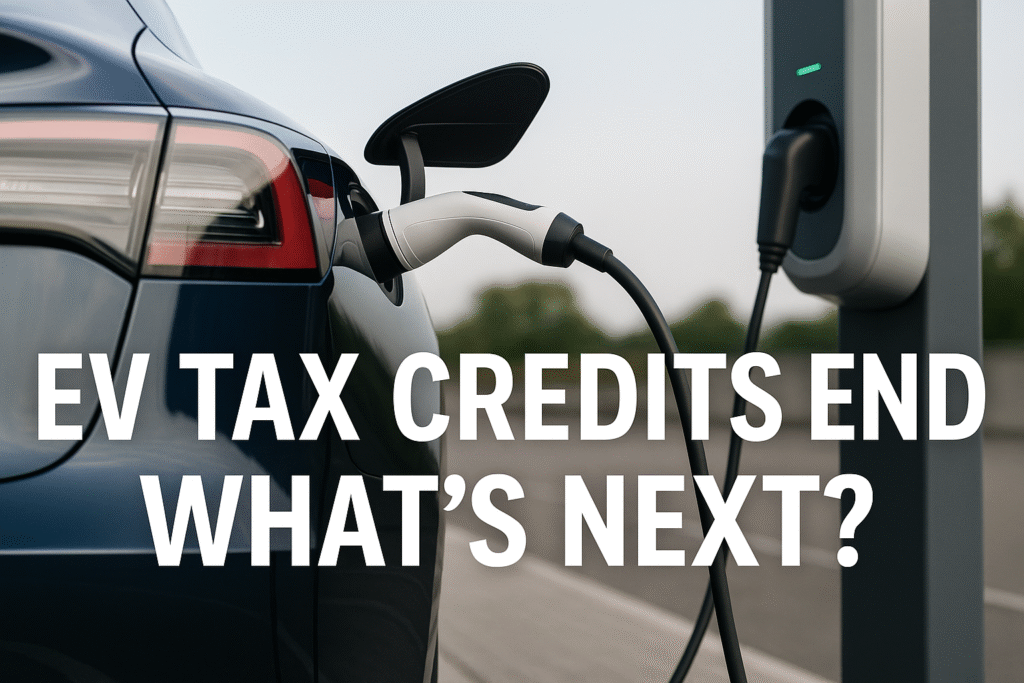
After years of fueling America’s electric vehicle boom, the federal EV tax credits officially expired on September 30, 2025. The $7,500 incentive for new electric cars — once seen as a vital tool for mass adoption — is gone, and the automotive industry is now entering a new, uncertain chapter.
While policymakers insist this marks a “mature” phase for the EV sector, automakers, suppliers, and consumers are still figuring out what the post-incentive era will look like.
📆 What ended, and why it matters
The now-defunct tax credit was a cornerstone of EV affordability. For many buyers, it directly reduced sticker prices, turning models like the Tesla Model Y, Chevrolet Bolt, and Hyundai Ioniq 5 into mainstream choices.
However, the new federal budget law passed earlier this year phased out these credits as part of a broader effort to cut spending. Lawmakers argued that the EV market is strong enough to stand on its own — though not everyone agrees.
“The credit was a bridge to affordability,” said one analyst. “Taking it away this soon risks slowing progress just as infrastructure and adoption were gaining traction.”
💸 How this affects EV buyers
Without the federal credit, new EVs instantly became thousands of dollars more expensive. The average transaction price for electric cars — already hovering around $54,000 — could rise by $3,000 to $8,000, depending on manufacturer discounts and state rebates.
1. Rising costs
Consumers will shoulder higher upfront prices, even as operating costs (charging, maintenance) remain lower than those of gas vehicles.
2. Leasing comeback
Many automakers are promoting leases again — allowing drivers to avoid high purchase prices while still accessing updated tech and warranty coverage.
3. State incentives soften the blow
While federal aid has vanished, several states — including California, New York, and Colorado — continue to offer rebates and reduced registration fees. Utilities are also expanding charging discounts to maintain interest.
Also Read this Global EV Lineup Expands as Automakers Accelerate Toward an Electric Future
🏭 Automakers face a new financial test
The end of tax credits hit manufacturers hard. General Motors reported a $1.6 billion write-down tied to its electric vehicle transition, while Ford and Stellantis are reevaluating production schedules.
🔧 EV lineup restructuring
Carmakers are shifting focus toward hybrids and plug-in hybrids, which are cheaper to produce and appeal to buyers wary of range limitations.
💰 Incentives shift from government to showroom
Instead of tax breaks, expect dealer-driven price cuts, low-interest financing, and loyalty programs as automakers fight to keep EVs competitive.
🧩 Consolidation on the horizon
Smaller startups without deep cash reserves may struggle. Experts predict that EV consolidation — through mergers, partnerships, or outright exits — could accelerate in 2026.
⚙️ Infrastructure and innovation remain key
Charging access and energy efficiency are now the new battlegrounds. With public subsidies tapering off, private investment from utilities and tech companies will determine how quickly charging networks expand.
Battery innovation is also racing forward. Manufacturers are pursuing solid-state batteries and cheaper lithium-iron-phosphate (LFP) chemistries to reduce dependence on subsidies.
“Affordability will now come from engineering, not policy,” notes an energy consultant. “The next generation of EVs must win on merit, not incentives.”
🌍 A global divergence
While the U.S. steps back from subsidies, other major markets are doubling down.
- China continues to support domestic EV makers through production incentives, battery material access, and export backing.
- Europe is extending rebates tied to emissions targets, while tightening fleet CO₂ rules to push automakers toward electrification.
- India and Southeast Asia are scaling new tax reliefs to attract investment from global EV brands.
The shift risks tilting competitiveness — giving Asian and European automakers an edge in global exports, while U.S. brands recalibrate for cost-driven production.
📉 Short-term slowdown, long-term resilience
Industry analysts anticipate a temporary slump in EV sales through early 2026 as consumers adjust to higher prices.
However, the fundamentals — growing charging infrastructure, lower running costs, and tightening emissions standards — still support long-term growth.
| Timeframe | Market Impact | Expected Trend |
|---|---|---|
| Q4 2025 | Demand dips after credit expiration | Short-term correction |
| Mid-2026 | Prices stabilize; new hybrid wave | Market recovery |
| 2027–2030 | Cheaper batteries and mass adoption | Gradual growth rebound |
✅ Final thoughts: the next phase of evolution
The end of EV incentives marks not the end of progress, but the beginning of a harder, more competitive era. Manufacturers will need to innovate faster, cut costs smarter, and prove that electric mobility can thrive without government lifelines.
For consumers, this may mean fewer subsidies — but also better technology, more choice, and stronger infrastructure in the years ahead.
The age of easy discounts is over — but the electric revolution is far from done.

Azeem Aosaf is a visionary entrepreneur, digital strategist, and educator with a mission to empower individuals through online earning and digital innovation. As the CEO of HelixNex LLC, he leads multiple ventures across e-commerce, education, and fintech—helping people turn their digital skills into sustainable income. Through his educational initiative RankTrak, Azeem has trained hundreds of students in SEO, YouTube Automation, Freelancing, and AI-powered marketing. His work bridges technology and opportunity—creating a platform where learning meets real-world success. When he’s not mentoring students or building digital products, Azeem shares insights on entrepreneurship, marketing trends, and financial freedom through his blogs and social platforms. His core belief: “Your Growth, Our Mission.”