🔋 A Turning Point for the EV Market
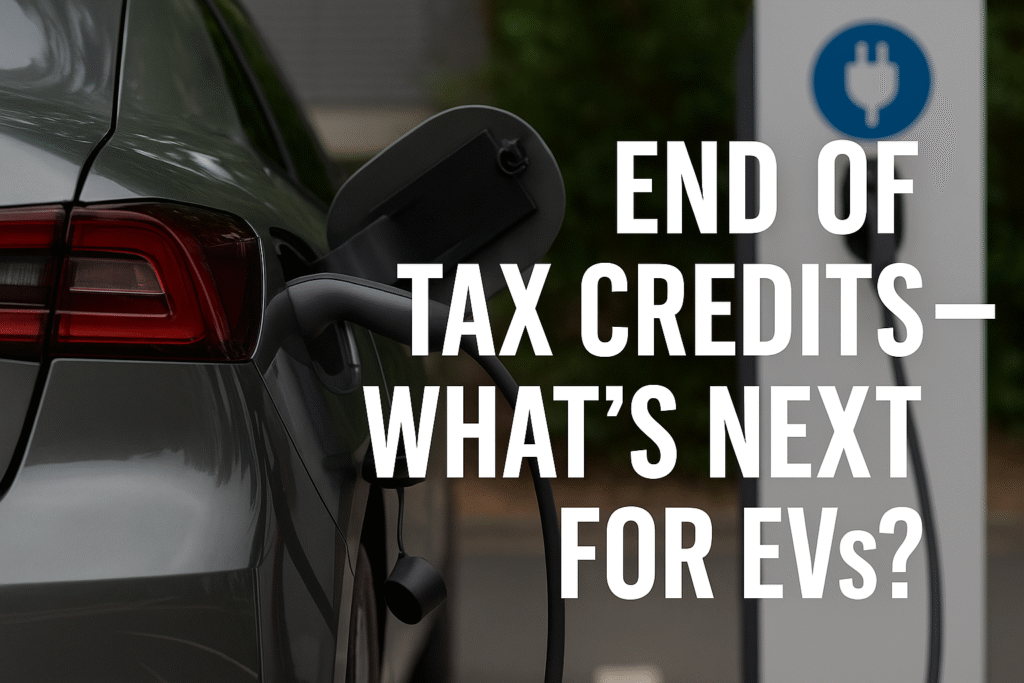
After more than a decade of government-backed incentives, the United States officially ended its federal tax credits for electric vehicles on September 30, 2025. For years, these credits reduced purchase costs by up to $7,500 for new EVs and $4,000 for used models, helping millions of buyers make the switch to cleaner transportation.
With those incentives now gone, both consumers and automakers are navigating a major transition — one that could reshape the next chapter of the electric mobility movement.
⚙️ Why the Credits Were Eliminated
The end of these tax benefits wasn’t abrupt; it was a calculated move tied to fiscal policy and a maturing EV market.
- Budget reprioritization: Legislators determined that continuing nationwide EV subsidies would significantly strain future budgets.
- Industry readiness: Policymakers argued that electric vehicles are no longer a fragile emerging market — they’ve entered the mainstream, capable of competing on merit.
- Policy balance: The change came as part of broader energy and manufacturing reforms intended to streamline incentives and direct funds toward infrastructure rather than individual tax rebates.
“The EV industry has grown strong roots. Now it must stand on its own,” one energy-policy advisor said during the announcement.
Also read this U.S.–U.K. Technology Prosperity Deal: A New Digital Alliance for the Future
💸 Short-Term Effects: Price Sensitivity and Buying Rush
In the months leading up to the policy sunset, showrooms across the country saw a surge in last-minute EV purchases. Consumers raced to finalize deals before the credits disappeared, driving an uptick in third-quarter sales.
But experts warn that the post-credit period will test affordability. Without those savings, the effective price of popular models like the Tesla Model Y, Ford F-150 Lightning, and Hyundai IONIQ 5 rose overnight — and that could slow down adoption in early 2026.
Market analysts project a temporary sales dip as buyers wait for new incentives, price drops, or cheaper models to emerge.
🏭 Automakers Adjusting to a New Reality
The industry response has been swift. Leading automakers are implementing strategies to soften the blow of higher sticker prices and maintain momentum:
- In-house discounts and rebates to replace lost federal benefits.
- Flexible financing and leasing programs targeting first-time EV owners.
- Value-driven upgrades — longer battery warranties, improved range, and bundled software services.
Many manufacturers are also pushing fleet and commercial sales, as bulk contracts help stabilize revenue while consumer demand recalibrates.
⚡ Infrastructure and State-Level Incentives Step In
Although federal credits have ended, several U.S. states continue to offer local rebates or registration incentives to encourage EV ownership. California, Colorado, and New York are expanding programs to offset the federal gap, while others are investing directly in charging-network infrastructure.
The focus is shifting from individual subsidies to public investment in accessibility — more chargers, faster networks, and smarter grid integration.
Industry observers believe this strategy could have a more lasting impact by addressing one of EV buyers’ biggest concerns: charging convenience.
🌎 Long-Term Outlook: A Self-Sustaining EV Market
Even without federal support, the electric vehicle revolution is unlikely to reverse course. Battery technology continues to advance, manufacturing costs are declining, and global automakers are fully committed to electrified portfolios.
The next wave of innovation will hinge on efficiency, affordability, and software-driven experiences rather than subsidies. Many carmakers plan to introduce entry-level EVs priced below $30,000 — the new benchmark for market expansion.
✅ Final Thoughts
The end of the U.S. federal EV tax credit closes one chapter of the electric-mobility story but opens another — one where competition, innovation, and infrastructure will determine success.
For consumers, the decision to go electric now depends less on incentives and more on true value — range, reliability, and performance. For automakers, it’s a stress test for their long-term commitment to a sustainable future.
The EV era isn’t ending — it’s evolving. The next breakthrough won’t come from tax codes, but from technology itself.
🔍 Frequently Asked Questions (FAQ)
1. When did the U.S. federal EV tax credits officially end?
The federal electric vehicle tax credits officially expired on September 30, 2025. This marked the end of up to $7,500 in new-EV credits and $4,000 in used-EV incentives that had supported electric car buyers for over a decade.
2. Why did the government decide to end EV tax incentives?
Lawmakers ended the program to reduce long-term budget spending and shift focus toward developing national charging infrastructure. Officials also stated that the EV market has matured enough to sustain growth without federal subsidies.
3. How will this affect car buyers?
Without the federal tax credit, most new electric cars will cost $5,000–$7,500 more out of pocket. Some automakers are countering this by offering direct rebates, extended warranties, or lease deals to keep their EVs attractive to buyers.
4. Are there any other EV incentives still available?
Yes. While the federal program has ended, several states still offer rebates and tax benefits. For example, California, Colorado, and New York provide local EV purchase credits or registration discounts. Some utility companies also give rebates for installing home chargers.
5. Will EV sales decline after the tax credit phase-out?
Analysts expect a short-term slowdown as consumers adjust to higher upfront prices. However, the long-term outlook remains positive, driven by lower battery costs, improved vehicle range, and a growing nationwide charging network.

Azeem Aosaf is a visionary entrepreneur, digital strategist, and educator with a mission to empower individuals through online earning and digital innovation. As the CEO of HelixNex LLC, he leads multiple ventures across e-commerce, education, and fintech—helping people turn their digital skills into sustainable income. Through his educational initiative RankTrak, Azeem has trained hundreds of students in SEO, YouTube Automation, Freelancing, and AI-powered marketing. His work bridges technology and opportunity—creating a platform where learning meets real-world success. When he’s not mentoring students or building digital products, Azeem shares insights on entrepreneurship, marketing trends, and financial freedom through his blogs and social platforms. His core belief: “Your Growth, Our Mission.”