Europe’s Bid for Digital Independence
The European Union is taking decisive steps toward achieving technological self-reliance, aiming to reduce its dependence on the United States and China. The European Commission (EC) is preparing a wide-ranging Digital Sovereignty and AI Strategy, which will outline how Europe plans to build its own ecosystem of advanced technologies — from artificial intelligence (AI) to semiconductors and cloud computing.
The move comes as global competition in tech intensifies, with Washington and Beijing dominating critical sectors such as AI, chip manufacturing, and data infrastructure. European policymakers believe the region must act quickly to secure its digital future and avoid becoming a passive consumer of foreign innovation.
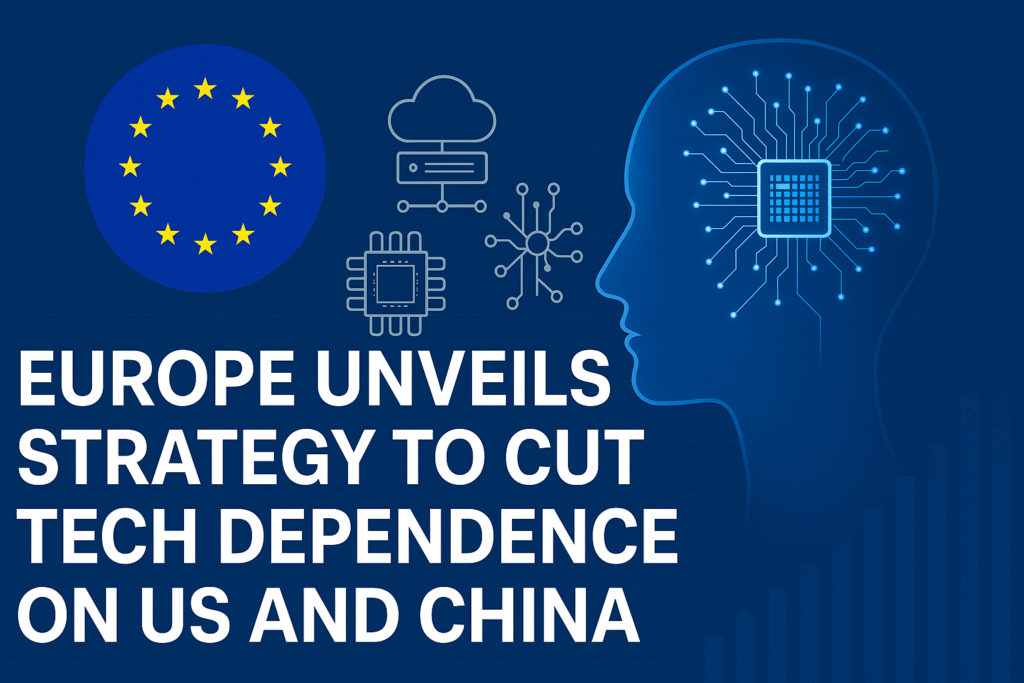
Why the EU Is Pushing for Tech Sovereignty
1. Economic and Strategic Security
Europe’s over-reliance on foreign technology — especially American cloud services and Chinese hardware — has raised concerns about economic vulnerability and data security. Dependence on external suppliers can expose governments and businesses to risks of surveillance, trade restrictions, or technology embargoes.
By developing its own infrastructure and standards, Europe aims to ensure greater control over its data and supply chains, while fostering innovation within its borders.
Read Also This: European Tech Stocks Struggle, But High-Growth Innovators Keep Investors Hooked
2. The AI Arms Race
Artificial intelligence is shaping the global economy, and the EU does not want to be left behind. While the US leads in AI innovation and China invests heavily in mass adoption, Europe’s focus is on ethical AI, transparency, and local innovation.
The new plan aims to build European-made AI models, encourage collaboration among startups and research centers, and integrate AI into key industries like healthcare, manufacturing, and energy.
3. Semiconductor and Cloud Infrastructure
A core pillar of the upcoming strategy involves strengthening Europe’s semiconductor supply chain and cloud infrastructure.
The European Chips Act is already funneling billions of euros into domestic chip production, while new programs will support EU-based cloud and data centers to rival Amazon Web Services, Microsoft Azure, and Alibaba Cloud.
What the New Strategy Includes
Boosting Investment in European Innovation
The European Commission plans to mobilize over €1 billion in AI funding to accelerate innovation in key sectors such as transport, energy, and healthcare. Additional proposals include a €10 billion Scale-Up Fund to help European startups compete with their American and Asian counterparts.
Encouraging Public-Private Collaboration
The strategy emphasizes strong partnerships between governments, universities, and the private sector. By pooling resources and expertise, the EU hopes to create cross-border innovation hubs that can rival Silicon Valley and Shenzhen.
Strengthening Data Sovereignty
Europe will expand its “GAIA-X” initiative — a framework for secure and transparent data sharing among EU member states. This is part of a broader plan to establish a trusted European cloud ecosystem that prioritizes privacy, compliance, and open standards.
Streamlined Regulations for Startups
To encourage entrepreneurship, the EU intends to simplify digital regulations and reduce barriers for small and medium-sized enterprises (SMEs) entering the tech space.
Challenges on the Road Ahead
While the EU’s ambition is clear, several challenges remain:
- Funding gaps: Europe still invests less in deep tech compared to the US and China.
- Fragmented markets: Regulatory differences between EU member states can slow innovation.
- Brain drain: Many of Europe’s brightest minds continue to migrate to Silicon Valley or Asia for better funding opportunities.
- Execution speed: Without faster implementation, Europe risks falling further behind in emerging technologies like quantum computing and next-gen AI.
Despite these obstacles, the strategy signals a clear intent: Europe wants to compete, not just cooperate, on the global tech stage.
Global Implications
Impact on the United States
For American tech giants, the EU’s strategy may mean tougher regulations and more competition. European governments are expected to prioritize home-grown solutions over U.S.-based software in public procurement and digital infrastructure.
Impact on China
China, which has rapidly expanded its influence through 5G, hardware, and AI exports, could face more restrictions in Europe. The EU’s push for secure and transparent supply chains may reduce Chinese companies’ market share in critical sectors.
Opportunities for Allies
Countries like the UK, Canada, and Japan could benefit from the EU’s shift toward autonomy by forming strategic tech partnerships that emphasize shared democratic values and data security.
The Future of Europe’s Digital Strategy
If executed effectively, the EU’s digital sovereignty plan could position Europe as a third power in global technology — one that champions ethical innovation, privacy protection, and fair competition.
The road ahead will require enormous investment, cross-border collaboration, and political unity. But Europe’s message to the world is unmistakable: it intends to build a future powered by European technology, not just imported solutions.
Frequently Asked Questions (FAQ)
Q1. What does “tech sovereignty” mean for the EU?
It refers to the EU’s ability to develop, control, and manage its own digital infrastructure and technologies without heavy reliance on external powers.
Q2. Will the EU stop using US or Chinese tech products?
No — the goal isn’t isolation but balance. Europe wants to reduce over-dependence while still engaging in global trade and partnerships.
Q3. Which sectors will benefit most from this strategy?
AI development, cloud computing, cybersecurity, semiconductors, and digital manufacturing will be the biggest beneficiaries.
Q4. How much money is the EU investing in this plan?
The European Commission has announced €1 billion for AI initiatives and an additional €10 billion fund to help scale European startups.
Q5. How will this strategy affect global competition?
It could rebalance the global tech landscape by positioning Europe as an independent innovator, reducing the duopoly of the US and China in cutting-edge technology.

Azeem Aosaf is a visionary entrepreneur, digital strategist, and educator with a mission to empower individuals through online earning and digital innovation. As the CEO of HelixNex LLC, he leads multiple ventures across e-commerce, education, and fintech—helping people turn their digital skills into sustainable income. Through his educational initiative RankTrak, Azeem has trained hundreds of students in SEO, YouTube Automation, Freelancing, and AI-powered marketing. His work bridges technology and opportunity—creating a platform where learning meets real-world success. When he’s not mentoring students or building digital products, Azeem shares insights on entrepreneurship, marketing trends, and financial freedom through his blogs and social platforms. His core belief: “Your Growth, Our Mission.”