From Bulky Lenses to Pocket-Sized Power
Smartphone photography has reached a new frontier. Just a few years ago, capturing distant details meant bulky lens attachments or heavy DSLRs. Today, brands are engineering periscope and multi-lens camera systems that deliver up to 10× optical zoom — without adding extra thickness to the phone.
This revolution combines precision optics, folded-lens engineering, and AI-based processing to bring professional-level zoom into ultra-slim devices.
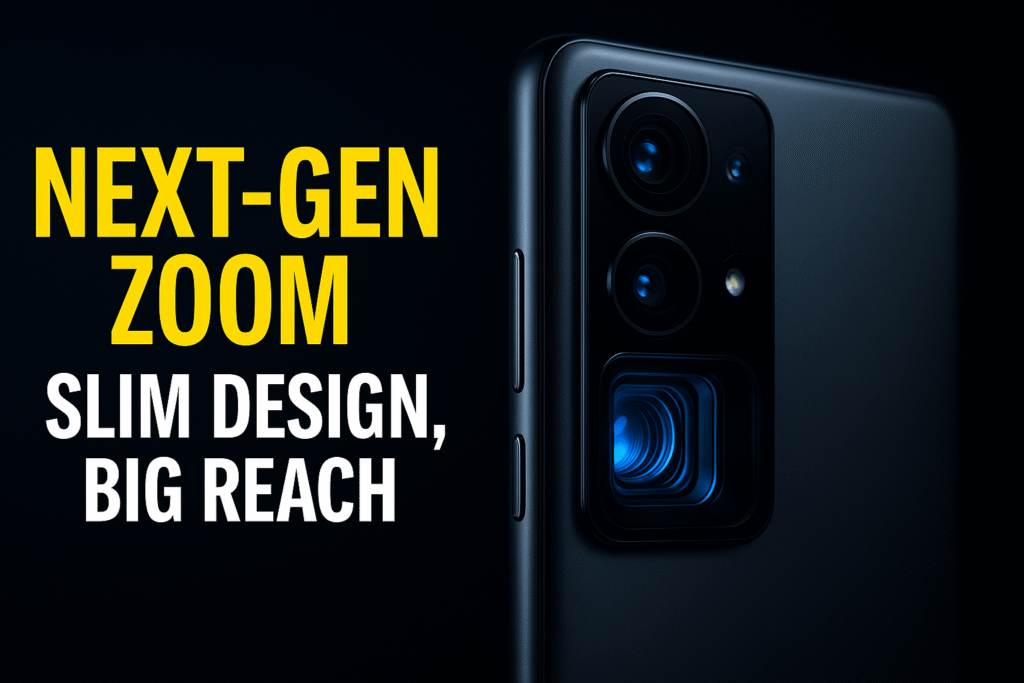
🔍 What Exactly Is Periscope Zoom?
The term periscope zoom describes a camera setup that bends incoming light through a prism or mirror inside the phone, allowing the lens to run horizontally instead of straight outward.
That folded design gives lenses the distance they need for true optical magnification — just like a telescope — while keeping the device sleek.
Meanwhile, multi-lens systems use several focal-length lenses (wide, ultra-wide, telephoto, macro) that work together to create seamless transitions between zoom levels. Modern phones switch or merge data from these lenses to produce crisp detail across every range.
Read Also This: Under-Display Cameras: The Hidden Revolution in Smartphone Design
⚙️ How Engineers Fit Zoom Into Thin Frames
Creating DSLR-level zoom in a body thinner than 8 mm isn’t easy. It’s made possible through:
- Folded-light pathways: Prisms redirect light sideways, giving more optical travel distance without bulging modules.
- Variable focal designs: Some setups include dual telephoto modules (for example 3× and 10×) sharing a single sensor, switching as needed.
- Precision sensors & stabilization: Large sensors with optical image stabilization (OIS) ensure sharpness even when fully zoomed.
- AI image fusion: Software now merges data from multiple cameras to boost clarity, color balance, and texture — especially in high zoom or low-light conditions.
Together, these advances allow users to zoom deeper and sharper while phones stay pocket-friendly.
📸 Real-World Examples
Leading devices like Huawei’s Pura 80 Ultra and Samsung’s Galaxy S25 Ultra show what’s possible. Huawei uses a dual-periscope system that switches between two optical paths, while Samsung’s flagship maintains 5× and 10× zoom modes inside a single slim housing.
Other brands — Vivo, Xiaomi, Oppo — are also experimenting with variable periscope modules and hybrid zoom systems, proving that optical excellence no longer requires a protruding camera bump.
💡 Why It Matters
- True optical detail: No pixel stretching or digital blurring; you get natural texture and sharpness.
- Compact design: Folded optics let phones remain slim and balanced.
- Creative freedom: Photographers can now shoot landscapes, architecture, or wildlife from afar with consistent quality.
- Steady results: OIS and computational correction counter hand movement, even at 10× zoom.
This shift turns every premium smartphone into a pocket-sized professional tool for creators.
⚠️ What’s Still Evolving
Despite big gains, challenges remain:
- Low-light zoom: Smaller apertures limit light capture compared with wide-angle lenses.
- Complexity & cost: Precision prisms and stabilization make these modules expensive to produce.
- Continuous zoom: Most phones still jump between preset zoom levels rather than offering fluid lens movement.
Manufacturers are already tackling these gaps. Samsung, Sony, and Oppo are testing continuous periscope zoom lenses capable of smooth transitions between 3× and 7× magnification — a major next step.
🔭 The Future of Mobile Zoom (2026 – 2030)
- Variable periscope lenses will enable seamless optical zoom ranges.
- AI-powered scene detection will auto-optimize lens choice for portraits, wildlife, or macro shots.
- Thinner modules will make powerful zoom available in mid-range phones.
- Glass-hybrid optics will further reduce reflection and improve low-light performance.
By 2030, handheld devices may rival mirrorless cameras for clarity and range — proving that innovation can shrink distance in more ways than one.
✅ Final Thoughts
Periscope and multi-lens zoom systems mark a turning point for mobile imaging. They’re not just about zooming closer; they’re about rethinking optical design to blend hardware mastery with smart processing.
The smartphone camera race is no longer about megapixels — it’s about how far and how clearly you can see without ever stepping closer.

Azeem Aosaf is a visionary entrepreneur, digital strategist, and educator with a mission to empower individuals through online earning and digital innovation. As the CEO of HelixNex LLC, he leads multiple ventures across e-commerce, education, and fintech—helping people turn their digital skills into sustainable income. Through his educational initiative RankTrak, Azeem has trained hundreds of students in SEO, YouTube Automation, Freelancing, and AI-powered marketing. His work bridges technology and opportunity—creating a platform where learning meets real-world success. When he’s not mentoring students or building digital products, Azeem shares insights on entrepreneurship, marketing trends, and financial freedom through his blogs and social platforms. His core belief: “Your Growth, Our Mission.”