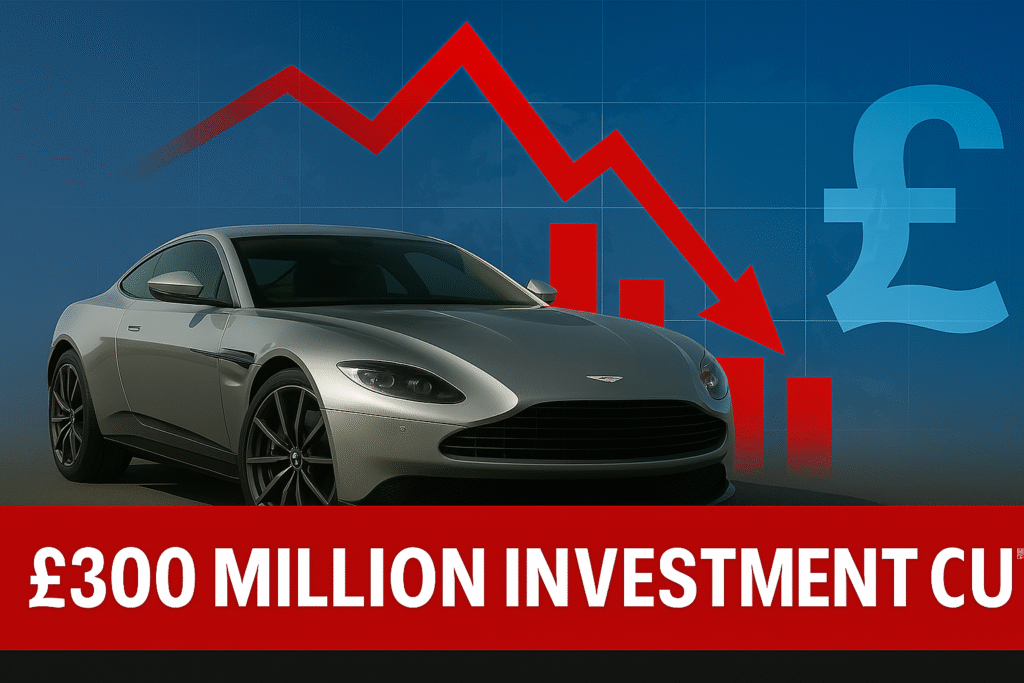
British luxury automaker Aston Martin is tightening its financial strategy, announcing a £300 million cut to its investment plans after a turbulent year marked by trade tariffs, global supply issues, and softening demand for high-end vehicles.
The decision underscores the mounting pressure facing carmakers as global economic uncertainty, U.S. tariffs, and weaker luxury spending in China combine to create one of the most challenging market environments in recent years.
📉 Why Aston Martin Is Reducing Investment
Aston Martin confirmed it will now spend about £375 million in 2025, a notable reduction from earlier projections. Over the next five years, total planned investment has been revised from £2 billion to around £1.7 billion.
This move is part of a broader effort to protect cash flow, improve margins, and ensure the company remains resilient through the current downturn.
Company executives say the decision was “strategic, not reactive” — meant to sharpen focus on key product lines while deferring some capital-heavy programs until market conditions stabilize.
Read Also This: 📱 UK MPs Warn Tech Giants: “You’re Not Doing Enough to Stop Phone Theft”
🌍 The Global Headwinds Behind the Cut
🏭 Tariffs Hitting Export Margins
The reintroduction of U.S. import tariffs on British-made cars has hit Aston Martin especially hard, as it lacks large-scale manufacturing presence in North America. These tariffs have squeezed profit margins and complicated logistics for a brand that relies heavily on U.S. buyers.
🇨🇳 Slower Growth in China
China’s economic slowdown is another major factor. Demand for luxury vehicles has softened as consumer confidence weakens and taxation on high-end imports increases. For a brand with global ambitions, this dip in Asia-Pacific sales is significant.
⚙️ Supply-Chain Strains Continue
Persistent supply-chain disruptions have delayed the delivery of new models and increased production costs. Industry-wide parts shortages — including semiconductors and specialty materials — have limited output capacity.
💱 Currency and Inflation Pressures
Volatile exchange rates and rising production costs have added to the squeeze. Inflation has increased manufacturing expenses, while the strong pound has made exports less competitive in several markets.
🚗 How Aston Martin Plans to Navigate the Storm
Despite the belt-tightening, Aston Martin insists it remains committed to its long-term goals — including the rollout of new hybrid and electric models by the late 2020s.
1. Refining the Product Roadmap
Some new projects are being delayed or scaled down to prioritize the most profitable models, such as the DBX SUV and Valhalla hybrid supercar.
2. Focusing on Profit Over Volume
The company plans to focus on bespoke, high-margin vehicles rather than chasing mass production targets — aligning more closely with luxury peers like Ferrari.
3. Operational Efficiency and Cost Control
Aston Martin is optimizing its manufacturing processes and supply partnerships to save costs without compromising craftsmanship or quality.
“We’re adjusting our investments to protect the brand’s financial strength while continuing to innovate for the future,” said an Aston Martin spokesperson.
💡 Industry Context: A Wider Luxury Car Squeeze
Aston Martin isn’t alone in feeling the pressure. Many high-end carmakers are grappling with:
- Weaker post-pandemic demand in Europe and China.
- Shifting consumer preferences toward hybrid and EV models.
- Tighter financing due to higher global interest rates.
This global slowdown has forced several luxury automakers to rethink expansion plans and slow down electrification timelines until profitability stabilizes.
📈 What’s Next for Aston Martin
The company expects modest improvement in performance in late 2025 and a stronger recovery in 2026, supported by:
- Delivery of next-generation hybrid vehicles.
- Rebound in North American and Middle Eastern demand.
- Operational cost savings reaching full effect.
However, analysts caution that persistent trade barriers and unpredictable global demand could continue to weigh on Aston Martin’s recovery trajectory.
⚠️ Investor Outlook
Investors are viewing the move as a sign of financial prudence rather than panic. Aston Martin shares dipped slightly following the announcement but later stabilized as markets interpreted the cut as a protective measure amid uncertainty.
The brand’s long-term vision — transitioning into a sustainable luxury manufacturer while preserving exclusivity — remains intact.
“It’s about resilience, not retreat,” one analyst noted. “Aston Martin is prioritizing survival over speed, which may be the right call in today’s environment.”
🧩 Frequently Asked Questions (FAQ)
Q1: How much investment has Aston Martin reduced?
A1: The company has trimmed around £300 million from its medium-term investment plans, lowering 2025 spending to roughly £375 million.
Q2: Why did Aston Martin cut its investment?
A2: Global challenges like U.S. tariffs, China’s luxury slowdown, supply-chain issues, and inflationary pressures have forced the company to protect liquidity and delay some projects.
Q3: Will this affect new car launches?
A3: Some non-core or experimental projects may be delayed, but key models like the DBX, Valhalla, and future hybrid cars remain on track.
Q4: How does this impact Aston Martin’s electric vehicle plans?
A4: EV development continues but at a slower pace. The company is expected to phase in hybrid models first before introducing full EVs later this decade.
Q5: What’s Aston Martin’s recovery plan for 2026?
A5: The automaker is focusing on margin growth, leaner operations, and high-end limited editions to improve profitability while maintaining its luxury status.

Azeem Aosaf is a visionary entrepreneur, digital strategist, and educator with a mission to empower individuals through online earning and digital innovation. As the CEO of HelixNex LLC, he leads multiple ventures across e-commerce, education, and fintech—helping people turn their digital skills into sustainable income. Through his educational initiative RankTrak, Azeem has trained hundreds of students in SEO, YouTube Automation, Freelancing, and AI-powered marketing. His work bridges technology and opportunity—creating a platform where learning meets real-world success. When he’s not mentoring students or building digital products, Azeem shares insights on entrepreneurship, marketing trends, and financial freedom through his blogs and social platforms. His core belief: “Your Growth, Our Mission.”