Even as global politics and trade negotiations continue to cause tension, the automotive industry has proven remarkably resilient. The vehicle trade between Europe and the United States — worth billions annually — remains a powerful force connecting two of the world’s largest car markets.
Despite tariffs, regulatory differences, and evolving consumer preferences, both regions have managed to sustain and even expand their automotive trade. It’s a rare case of economic cooperation surviving geopolitical strain.
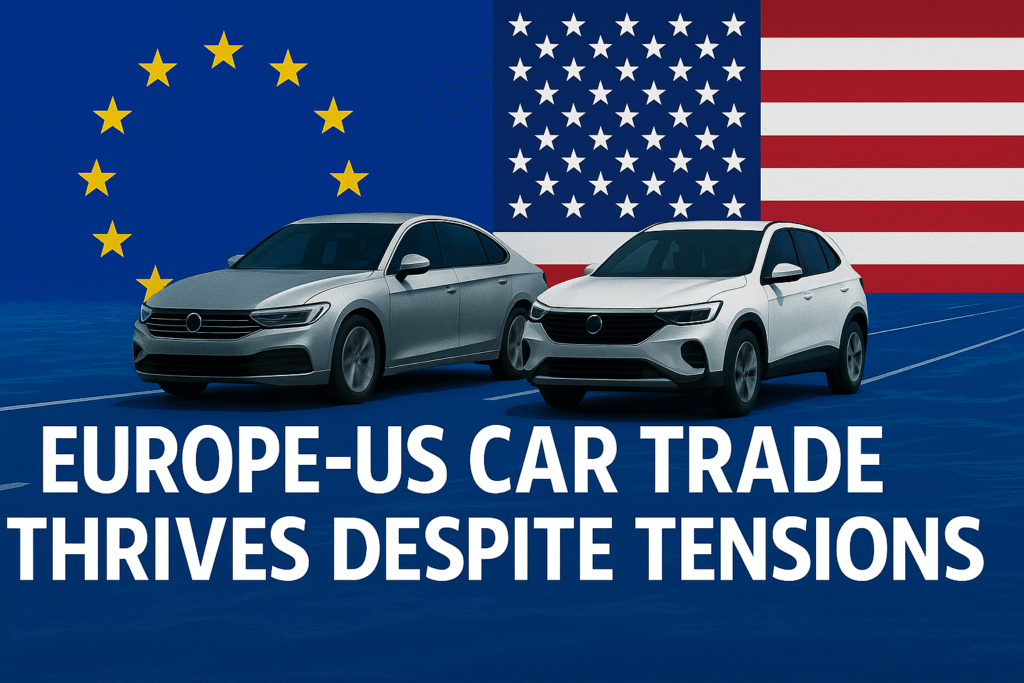
🌍 Transatlantic Trade by the Numbers
The European Union and the United States have one of the most interconnected automotive relationships in the world.
📊 Key Figures
- The US is the second-largest destination for European-made vehicles, accounting for roughly 22% of total EU vehicle exports by value.
- In 2024, European automakers shipped more than €38 billion worth of vehicles to the US market.
- About 15% of these exports were fully electric models — showing the early rise of EVs in international trade.
- Meanwhile, the US exports far fewer cars back to Europe, leading to a significant trade imbalance that often fuels policy disputes.
Still, these figures highlight one clear fact: the economic link between Europe and the US auto industries remains vital despite all the turbulence.
Read Also This: 🔧 The Future of Automobiles: Software-Defined Cars and the Rise of Smart After-Market Services
⚙️ Why the Partnership Persists
Trade resilience comes from deep-rooted ties, strong consumer demand, and shared industrial history. Several factors continue to keep the transatlantic automotive connection alive:
1. Mutual Market Strength
European brands like BMW, Mercedes-Benz, Volkswagen, and Volvo remain highly sought after by American consumers — especially in the luxury and performance segments. In return, American automakers like Ford and Tesla maintain a solid presence in Europe.
2. Local Manufacturing Footprints
Many European automakers operate factories in the US, creating local jobs and softening trade risks. Similarly, some American carmakers assemble vehicles in European facilities to meet demand and navigate regional regulations.
3. Shared Technological Goals
Both regions are investing heavily in EV development, autonomous driving, and clean mobility. Shared innovation helps sustain cooperation even when trade talks falter.
4. Supply Chain Integration
Beyond complete vehicles, thousands of automotive components and systems — from software to batteries — move back and forth across the Atlantic every day. This supply chain interdependence makes decoupling nearly impossible.
⚠️ Ongoing Frictions and Emerging Challenges
While trade flows remain strong, tensions are far from gone. Political disagreements and market shifts could reshape the future of transatlantic vehicle commerce.
🏛️ Tariffs and Trade Imbalances
Although new agreements have eased fears of an all-out tariff war, import duties still hover around 10–15% on certain vehicle categories. European automakers argue that these rates make it harder to compete fairly, especially as US domestic production expands.
The imbalance is stark: Europe exports far more vehicles to the US than it imports, leading some US policymakers to push for “fairer” trade terms.
⚙️ Regulatory Differences
Europe’s strict emissions rules and the US’s more flexible safety standards create compliance headaches for automakers. Cars often need different versions for each market — adding cost and complexity.
Efforts to harmonize regulations continue, but progress is slow due to differing political priorities and lobbying pressures.
🔋 Electrification Pressure
The shift to electric mobility could both strengthen and strain trade ties. Europe is exporting more EVs to the US, but as both regions push for domestic production, competition for battery materials and supply chains is intensifying.
🌐 Global Competition
Asian automakers, particularly from China and South Korea, are rapidly expanding their presence in both markets. Their competitive pricing and growing EV portfolios are forcing US and EU companies to collaborate — and compete — on a new level.
🧭 Strategic Importance of the Transatlantic Auto Relationship
Even with growing global competition, the Europe–US automotive corridor remains central to the industry’s stability.
🔹 For Automakers
- Building cars across both continents allows flexibility and resilience against market shocks.
- Companies like BMW and Volkswagen use their US plants as export bases, shipping vehicles back to Europe and beyond.
- The transatlantic market serves as a testing ground for advanced technologies, including self-driving and connected car systems.
🔹 For Consumers
- American buyers get access to European craftsmanship and engineering excellence, while European drivers enjoy innovations from the US, such as electric performance vehicles and advanced infotainment systems.
- This healthy competition pushes both sides to innovate faster and deliver better value.
🔹 For Policymakers
- The trade supports hundreds of thousands of jobs on both continents.
- It also reinforces broader diplomatic and economic ties — making it as much a political partnership as an industrial one.
📅 What’s Next for 2026 and Beyond
The next few years will determine whether the Europe–US vehicle trade continues to flourish or faces serious disruption.
Key Trends to Watch:
- EV Expansion: Will European electric models gain bigger US market share before domestic American EVs dominate?
- Tariff Adjustments: Future trade agreements could reshape cost structures for manufacturers.
- Regulatory Convergence: Joint standards on safety and emissions could simplify trade logistics.
- Local Production Growth: Expect more European carmakers to expand US manufacturing to offset trade barriers.
- Sustainability Commitments: Both regions aim to decarbonize transport — aligning on green technology could boost cooperation.
If policymakers play it right, the next phase of transatlantic automotive collaboration could set the standard for sustainable global trade.
💬 Final Thoughts
Despite political friction and economic uncertainty, the Europe–US vehicle trade remains one of the strongest in the world. It’s built not just on commerce, but on decades of trust, innovation, and mutual benefit.
As automakers navigate a new era defined by electric mobility, AI integration, and shifting global alliances, one truth remains: the Atlantic may divide continents, but it unites the automotive industry.
The challenge ahead isn’t whether trade will continue — it’s how both sides can make it fairer, greener, and more future-ready.
❓ Frequently Asked Questions (FAQ)
Q1. Why is the US a key export market for European cars?
Because American consumers favor premium and high-performance European brands like BMW, Audi, and Mercedes-Benz, which maintain strong brand prestige and loyalty.
Q2. What’s the main source of tension in transatlantic vehicle trade?
Tariffs, differing regulations, and a trade imbalance where Europe exports far more vehicles to the US than it imports.
Q3. How does electrification affect trade?
EV growth is reshaping trade routes, with Europe exporting more electric models while both regions compete for battery production and raw materials.
Q4. Could US–EU tariffs increase again?
Possibly. Political shifts or protectionist policies could reignite tariff disputes, but both sides currently aim to maintain stability.
Q5. Is this trade beneficial for jobs?
Yes. Transatlantic vehicle trade supports hundreds of thousands of direct and indirect jobs in manufacturing, logistics, and services on both continents.

Azeem Aosaf is a visionary entrepreneur, digital strategist, and educator with a mission to empower individuals through online earning and digital innovation. As the CEO of HelixNex LLC, he leads multiple ventures across e-commerce, education, and fintech—helping people turn their digital skills into sustainable income. Through his educational initiative RankTrak, Azeem has trained hundreds of students in SEO, YouTube Automation, Freelancing, and AI-powered marketing. His work bridges technology and opportunity—creating a platform where learning meets real-world success. When he’s not mentoring students or building digital products, Azeem shares insights on entrepreneurship, marketing trends, and financial freedom through his blogs and social platforms. His core belief: “Your Growth, Our Mission.”