A few years ago, cars learned about their drivers through basic memory settings — like saving your seat position or favorite radio station.
Now, thanks to the rise of smartphone-based AI companions, your phone is beginning to teach your car how you drive.
This isn’t science fiction anymore. Today’s AI-driven smartphones can recognize your driving patterns, anticipate your needs, and adjust everything from navigation to comfort — all while helping you drive smarter, safer, and more efficiently.
Welcome to the next phase of personalized mobility.
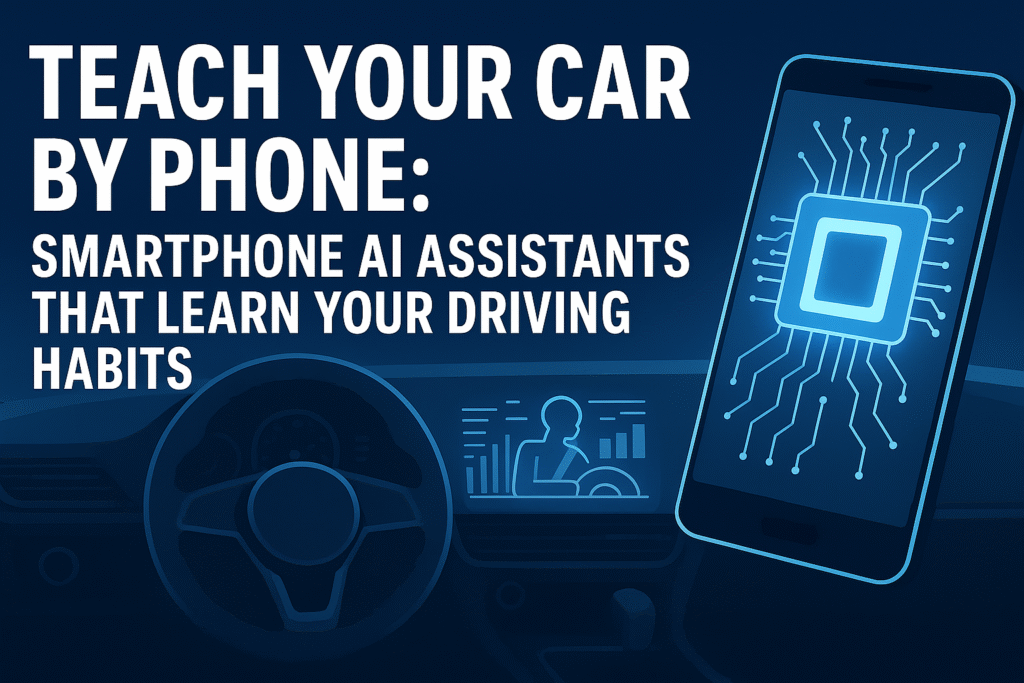
📱 1. From Hands-Free to “Knows Me”: The Rise of Adaptive Car AI
Voice assistants like Siri, Alexa, and Google Assistant introduced convenience to our daily drives. But the latest generation of AI driving companions goes a step further — they learn from your behavior over time.
Through sensors like GPS, accelerometers, gyroscopes, and motion detectors, your smartphone can now track how you accelerate, brake, or corner. Over time, this data helps the AI create a driving profile unique to you.
Read Also This: 🚗 Foldables Meet Four Wheels: How Foldable Smartphones Will Transform Car Entertainment in the UK
Key Capabilities Already in Use
- Driving pattern recognition: Detects your driving rhythm — whether you’re a calm cruiser or a quick accelerator.
- Real-time suggestions: Offers safer following distances or braking advice based on recent habits.
- Predictive personalization: Adjusts routes, playlists, and even climate controls before you start the engine.
In short, your phone is becoming a digital co-pilot that understands not just your destination — but how you like to get there.
⚙️ 2. How Smartphone AI Actually Learns You
Modern smartphones house powerful neural processing units (NPUs) — tiny AI chips designed to process data locally. This allows your phone to analyze your driving style privately and securely.
The system can track variables like:
- Speed consistency and acceleration patterns.
- Reaction times in traffic or sharp turns.
- Environmental habits (e.g., how you drive in rain vs. clear weather).
The AI then feeds this insight into adaptive car systems, which respond dynamically.
For example, if it learns that you prefer smooth acceleration and minimal cabin noise, your EV’s drive mode or acoustic system can adjust accordingly — automatically.
🌍 3. Real-World Use Cases in the UK, US & Canada
🇬🇧 United Kingdom
In congested cities like London and Manchester, adaptive smartphone AI helps EV owners plan smarter routes, avoid traffic fines, and optimize charging times. Integration with energy tariffs even allows the app to schedule charging when electricity is cheapest.
🇺🇸 United States
On long highway drives, American drivers benefit from predictive fatigue detection and adaptive cruise suggestions. The AI assistant can monitor driving consistency and subtly remind you to take breaks or reroute around severe weather.
🇨🇦 Canada
With snow, ice, and vast rural routes, Canadian drivers see improvements in climate pre-conditioning and safety alerts tailored to local terrain. The AI learns your preferred temperature and starts warming your car before you leave.
These region-specific innovations prove one thing: your phone isn’t just connecting to your car — it’s collaborating with it.
🤖 4. What Your Phone Will Soon Control
AI-based smartphone companions are turning into full-fledged control hubs for electric and connected vehicles. Here’s a glimpse of what’s next:
| Feature | What It Does | Why It Matters |
|---|---|---|
| Adaptive Driving Mode | Adjusts throttle, steering, and energy usage based on your habits. | Personalized performance and range optimization. |
| Predictive Navigation | Suggests routes based on your preferred driving pace and fuel or battery status. | Saves time and energy. |
| Mood-Based Cabin Settings | Changes lighting, temperature, and music automatically. | Turns every commute into a personalized comfort zone. |
| AI Coaching Mode | Gives feedback on eco-efficiency and safety. | Helps you become a better driver over time. |
| Phone-as-Controller | Allows remote control for locks, climate, and charging. | Consolidates control into one intelligent device. |
🔐 5. Security, Privacy & Ethical Design
With great intelligence comes great responsibility.
AI-driven personalization involves sensitive data like location, speed, and driving style. Manufacturers now design these systems around data minimalism — collecting only what’s necessary and processing it securely.
- On-device learning: Many phones perform AI analysis locally, not in the cloud, reducing privacy risks.
- Encryption: Vehicle communication channels are secured end-to-end.
- Transparency: Drivers should be able to view, delete, or limit data storage at any time.
The future of “teaching your car” depends on trust — and that means giving drivers full visibility into how their AI works.
🧠 6. How Automakers & Smartphone Brands Are Collaborating
Big names in both industries are racing to own this next-gen driving ecosystem.
- Google & Volkswagen are co-developing a smartphone-based AI assistant capable of predicting driver needs before voice commands.
- Apple is expanding its CarKey and CarPlay+ systems to include adaptive AI for electric vehicles.
- Samsung is integrating Galaxy AI with select EV models to enable personalized driving and battery optimization.
By 2026, most premium cars will feature AI assistants that sync directly with your smartphone profile, turning your phone into the command center of your mobility life.
⚠️ 7. Challenges That Still Exist
While this technology is accelerating quickly, there are some hurdles:
- Lag and accuracy: AI models need more real-time refinement for instant response.
- Interoperability: Different phones and car brands often use separate ecosystems.
- User fatigue: Not all drivers want constant “coaching” from their devices.
- Data ethics: Regulation and transparency still lag behind innovation speed.
Still, as connectivity matures, these issues are being solved with standardized APIs and cross-brand collaborations.
🏁 Conclusion
In a world where your phone already knows your sleep schedule, fitness goals, and favorite coffee order, it’s no surprise that it’s learning your driving habits next.
Smartphone AI assistants represent the next leap in personalized transportation — bridging the gap between human intuition and machine intelligence.
Soon, your car won’t just drive for you. It will drive like you.
❓ Frequently Asked Questions (FAQ)
Q1: How can a smartphone learn my driving habits?
AI models use data from your phone’s sensors (GPS, accelerometer, gyroscope) to detect and learn your driving behavior over time.
Q2: Is this technology available now?
Yes — early versions already exist in vehicles from brands like Tesla, Hyundai, and BMW, with deeper AI integration expected by 2026.
Q3: Does this compromise privacy?
No, most systems use encrypted, on-device learning to protect driver identity and data.
Q4: Can these assistants improve safety?
Absolutely. They provide real-time suggestions, fatigue alerts, and feedback that help reduce risky driving behavior.
Q5: What’s next for AI-assisted driving?
The next phase is predictive intelligence, where your phone anticipates your needs before you act — from starting the car to adjusting routes mid-journey.

Azeem Aosaf is a visionary entrepreneur, digital strategist, and educator with a mission to empower individuals through online earning and digital innovation. As the CEO of HelixNex LLC, he leads multiple ventures across e-commerce, education, and fintech—helping people turn their digital skills into sustainable income. Through his educational initiative RankTrak, Azeem has trained hundreds of students in SEO, YouTube Automation, Freelancing, and AI-powered marketing. His work bridges technology and opportunity—creating a platform where learning meets real-world success. When he’s not mentoring students or building digital products, Azeem shares insights on entrepreneurship, marketing trends, and financial freedom through his blogs and social platforms. His core belief: “Your Growth, Our Mission.”