Introduction
While the spotlight shines brightly on fully electric cars, another player is quietly staging a comeback in Europe’s fast-evolving auto market — the plug-in hybrid.
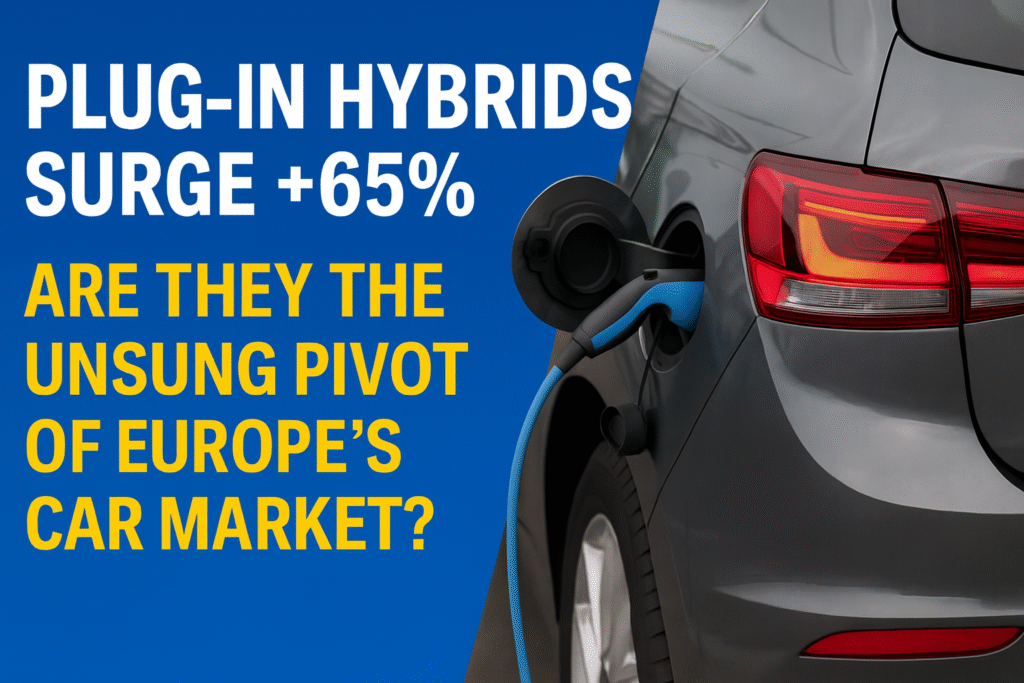
Recent data shows plug-in hybrid vehicle (PHEV) registrations jumped by more than 65% across Europe in 2025. That’s a stunning leap in a year when overall car sales rose 10%. And it raises an important question:
👉 Are plug-in hybrids the real pivot point in Europe’s journey toward electrification?
As governments push toward zero-emission targets and automakers rethink their strategies, PHEVs appear to have found new momentum as a bridge between the old and the new.
Europe’s Plug-in Hybrid Boom
Across the EU, UK and EFTA markets, plug-in hybrids have become the surprise growth story of 2025.
- PHEV registrations surged +65.4% year-on-year, far outpacing the growth of pure battery EVs.
- Fully electric cars (BEVs) still command roughly 16% of market share — but their growth has slowed.
- Meanwhile, traditional petrol and diesel sales continue to decline as governments tighten emission targets.
This unexpected hybrid revival suggests Europe’s drivers and manufacturers are looking for a realistic middle path — a car that combines electric power for city commutes with the reassurance of a petrol engine for long trips.
Read Also This: Tesla’s Share Falls in Europe — Is Luxury EV Dominance Under Threat?
What’s Driving the PHEV Surge?
1. A Practical Solution to Charging Challenges
Despite massive EV investment, charging infrastructure across Europe remains uneven.
- Plug-in hybrids remove “range anxiety” by offering a fuel backup when charging stations are scarce.
- For many drivers without home chargers — especially those living in flats or older cities — a PHEV feels like a more convenient step toward electric driving.
2. Government Policies and Emission Targets
European nations are tightening fleet emission rules, forcing automakers to reduce CO₂ averages.
- PHEVs help manufacturers meet those targets more affordably than BEVs alone.
- Several countries still offer tax breaks and company-car benefits for plug-in hybrids, giving them a competitive edge over standard gas cars.
3. Affordability and Accessibility
- Plug-in hybrids often cost less than a comparable battery EV while offering some of the same green credentials.
- They also appeal to buyers who aren’t ready to fully commit to electric but want to future-proof their purchase.
4. Automakers Doubling Down on Hybrids
Leading brands like BMW, Volvo, Peugeot and Volkswagen are re-investing in PHEV lineups. The latest models boast longer electric-only ranges (60–100 km), faster charging, and better efficiency than earlier versions.
The Case for Plug-in Hybrids as the “Pivot Point”
⚡ They Bridge Today and Tomorrow
PHEVs help drivers transition toward electric mobility without fear of being stranded or inconvenienced. They enable consumers to adopt electrified driving habits while the charging network catches up.
🚘 They Balance Consumer Choice and Industry Pressure
Manufacturers can meet emission targets and regulations while still selling vehicles that fit current lifestyles. This balance keeps factories running and jobs secure through the transition years.
💰 They Deliver Profit Now
Because PHEVs build on existing ICE platforms, they require less investment than fully new BEV lines. That makes them a profitable “bridge” technology for automakers funding the next generation of electric cars.
But There’s a Flip Side
⚠️ Real-World Emissions Can Be Higher Than Advertised
Many plug-in hybrids don’t spend as much time in electric mode as promised. When drivers fail to charge regularly, PHEVs behave like normal petrol cars — undermining their eco benefits.
🕰️ They Could Delay Full EV Adoption
If buyers stick with hybrids for too long, the push toward zero-emission transport might slow down. Governments may need to set clear timelines for phasing out combustion elements even in PHEVs.
🧩 Policy Shifts Are Coming
The EU plans to ban new fossil-fuel vehicles by 2035. While plug-in hybrids could still exist within that window, future rules may tighten to favour zero-emission BEVs entirely.
Global Takeaways — Why This Matters Beyond Europe
🇬🇧 United Kingdom
Britain’s drivers and fleets are still adjusting to post-Brexit emission targets. The PHEV boom shows how drivers value flexibility. For UK automakers, expanding plug-in lineups could preserve market share while infrastructure expands.
🇺🇸 United States
The U.S. market has been slower to embrace plug-ins, but Europe’s trend may inspire American manufacturers to see hybrids as a stepping-stone for mass EV adoption — especially in regions where charging infrastructure lags.
🇨🇦 Canada
Canada’s vast distances and cold climate make PHEVs a practical choice for many drivers. The European surge suggests Canadian policymakers should balance incentives to support both PHEVs and BEVs until nationwide charging access is consistent.
Looking Ahead: Will PHEVs Stay Relevant?
The next five years will decide whether plug-in hybrids remain a key pillar of the European market or fade as full EVs take over. Their fate depends on:
- Policy direction: Will governments maintain incentives or shift support entirely to BEVs?
- Charging growth: If infrastructure improves rapidly, the need for PHEVs may diminish.
- Consumer behaviour: Regular charging turns PHEVs into efficient tools; neglecting it makes them less green.
- Innovation: Longer electric-only ranges and smarter battery management could extend PHEV relevance well into the 2030s.
Conclusion
Europe’s plug-in hybrid boom isn’t a fluke — it’s a sign that consumers want progress without pain. As fully electric cars march toward mainstream status, PHEVs are acting as the bridge technology keeping the transition smooth and affordable.
Yet they come with a warning: if overused, they could slow the final shift to zero emissions. For now, though, plug-in hybrids are clearly the unsung heroes of Europe’s car market, helping millions of drivers step confidently into the electric era.
Frequently Asked Questions (FAQ)
Q1. Why are plug-in hybrids growing so fast in Europe?
Because they combine electric driving with fuel flexibility, making them ideal for consumers who aren’t ready to go fully electric.
Q2. Do PHEVs really help reduce emissions?
Yes — but only when charged and used properly. If drivers ignore charging, the benefits shrink dramatically.
Q3. Will PHEVs disappear after 2035?
Not immediately. They may co-exist with BEVs until regulations fully phase out combustion elements.
Q4. Are plug-in hybrids cheaper than full EVs?
Generally yes. They cost less upfront and don’t require the same charging infrastructure investment.
Q5. What’s next for the European car market?
Expect a dual track — rapid growth in BEVs at the top end and steady PHEV sales as consumers seek balance and practicality.

Azeem Aosaf is a visionary entrepreneur, digital strategist, and educator with a mission to empower individuals through online earning and digital innovation. As the CEO of HelixNex LLC, he leads multiple ventures across e-commerce, education, and fintech—helping people turn their digital skills into sustainable income. Through his educational initiative RankTrak, Azeem has trained hundreds of students in SEO, YouTube Automation, Freelancing, and AI-powered marketing. His work bridges technology and opportunity—creating a platform where learning meets real-world success. When he’s not mentoring students or building digital products, Azeem shares insights on entrepreneurship, marketing trends, and financial freedom through his blogs and social platforms. His core belief: “Your Growth, Our Mission.”