Introduction
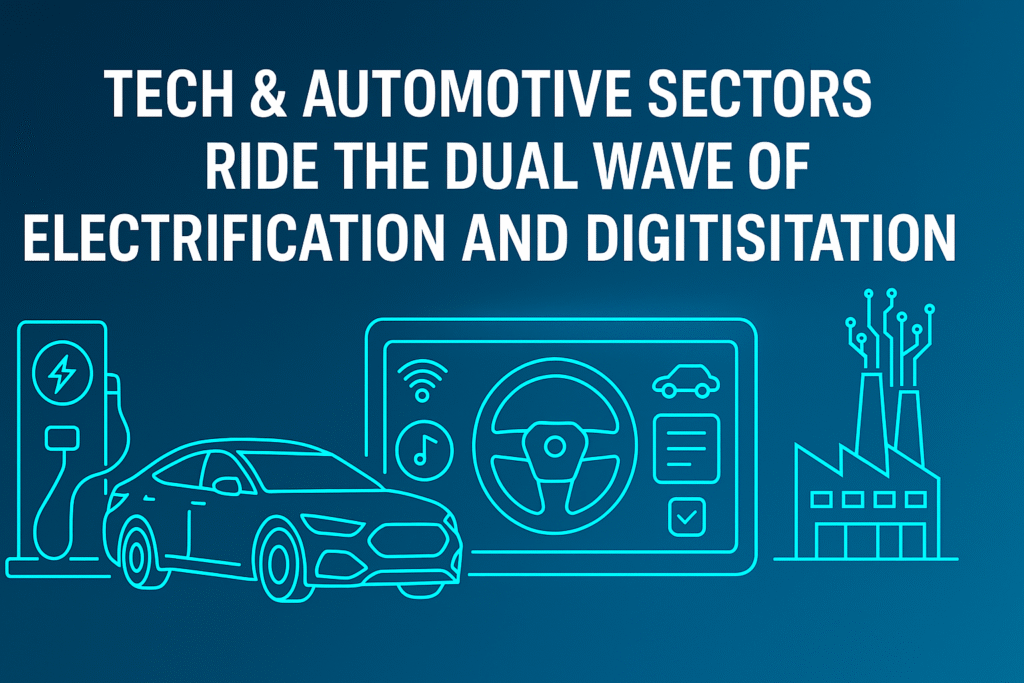
The global automotive and technology landscapes are experiencing their most transformative phase in decades. Two megatrends — electrification and digitisation — are redefining how we design, build, and experience vehicles.
From electric cars that charge in minutes to vehicles powered by software updates, the fusion of clean energy and cutting-edge technology is reshaping mobility across the UK, US, and Canada.
This evolution is more than an industrial shift — it’s the foundation of a new era of intelligent, sustainable, and connected living.
1. Electrification: The Engine of a Cleaner Future
The Rise of the Electric Revolution
Governments across major economies are setting ambitious deadlines to phase out combustion engines. The US Inflation Reduction Act and the UK’s 2035 ban on new petrol and diesel cars are pushing automakers to fully embrace electrification.
In 2025, electric vehicles (EVs) are no longer niche — they’re mainstream. Global EV sales are expected to exceed 20 million units, led by brands like Tesla, BYD, Ford, Hyundai, and Rivian.
Read Also This: 🧠 U.S. Tech Giant Invests £3.9 Billion in UK Data Centers to Boost AI and Cloud Infrastructure
What’s Driving Electrification
- Climate targets: Net-zero commitments are forcing industries to cut emissions.
- Consumer demand: Buyers want eco-friendly and low-maintenance vehicles.
- Innovation: Advances in solid-state batteries and fast-charging networks are reducing range anxiety.
- Government incentives: Tax credits and subsidies continue to boost adoption across North America and Europe.
Beyond Cars: Electrification Everywhere
Electrification isn’t limited to passenger cars. Electric trucks, buses, delivery vans, and even marine vessels are entering the market, transforming logistics, public transport, and freight.
2. Digitisation: The Software Takeover
From Mechanics to Microchips
The modern car is now a rolling computer. Software determines everything from performance and safety to entertainment and personalization.
Features like over-the-air (OTA) updates, voice-controlled assistants, and AI-powered diagnostics are becoming standard. This has given birth to the Software-Defined Vehicle (SDV) — a machine that evolves digitally long after it’s sold.
The Digital Backbone
Digitisation is not limited to the vehicles themselves. It extends to:
- Smart factories that use robotics and digital twins for precision manufacturing.
- AI-driven supply chains that predict demand and prevent disruptions.
- Cloud-based ecosystems connecting cars, drivers, and service providers in real time.
Big Tech’s Growing Role
Companies like Google, Apple, Amazon, and NVIDIA are redefining mobility. Apple’s CarPlay and Google’s Android Automotive OS dominate infotainment systems, while NVIDIA’s DRIVE platform powers autonomous navigation and safety analytics.
3. Where Electrification and Digitisation Meet
The convergence of these two forces is giving rise to a new mobility paradigm: vehicles that are clean, connected, and constantly evolving.
Key Synergies
- Smart energy use: AI algorithms optimize battery health and driving efficiency.
- Vehicle-to-Grid (V2G): Cars feed power back to the grid when parked.
- Predictive maintenance: Cloud systems analyze sensor data to prevent breakdowns.
- Autonomous driving: Electrification and AI work hand-in-hand to enable driverless capabilities.
This marriage of hardware and software marks a shift from traditional car ownership to mobility-as-a-service (MaaS) — where users subscribe to transport experiences instead of buying vehicles outright.
4. Regional Outlook
United States
- Rapid expansion of EV charging infrastructure through public-private partnerships.
- Automakers like GM and Ford investing heavily in digital cockpits and autonomous technology.
- Silicon Valley startups pushing innovation in battery chemistry and connected systems.
United Kingdom
- National EV infrastructure plan accelerating charging coverage.
- British automakers like Jaguar Land Rover transitioning to fully electric fleets by 2030.
- A rising ecosystem of AI-driven auto suppliers in London and Birmingham supporting digital transformation.
Canada
- Emerging as a battery materials hub for lithium and nickel.
- Investments in smart manufacturing facilities in Ontario and Quebec.
- Strong governmental support for both green energy and AI-powered automation.
5. Challenges Ahead
Despite the progress, the path to an electrified and digitised future isn’t free of roadblocks.
1. Infrastructure Gaps:
Insufficient fast-charging networks and patchy 5G coverage could slow adoption.
2. Cybersecurity Risks:
Connected cars collect vast data — from driver behavior to location tracking — raising privacy and security concerns.
3. Supply Chain Strain:
Global shortages of chips, lithium, and rare earth materials continue to challenge production timelines.
4. High Upfront Costs:
While running costs are lower, initial EV and digital integration costs remain steep for consumers and automakers alike.
5. Workforce Transition:
Mechanics and engineers need new skills in coding, battery systems, and AI — marking a fundamental shift in the job market.
6. The Road Ahead
The coming years will define the winners and losers in this transformation. Companies that integrate electrification and digitisation seamlessly will dominate the mobility landscape.
Expect to see:
- Fully connected electric ecosystems, from homes to highways.
- Cars that generate recurring revenue through digital services.
- A complete redesign of city infrastructure to support clean and connected transport.
- Closer collaborations between automakers, tech firms, and energy providers.
As 2025 unfolds, the message is clear — the future of mobility lies at the intersection of electricity and intelligence.
7. Conclusion
The fusion of electrification and digitisation is more than an industrial trend — it’s a global revolution shaping how we live, travel, and connect.
By blending sustainability with smart technology, the tech and automotive sectors are setting the stage for a greener, safer, and smarter world. For consumers, it means convenience and cleaner mobility. For industries, it’s a race toward innovation.
In short, electricity powers the motion — software defines the experience.
Frequently Asked Questions (FAQ)
Q1. What is electrification in the automotive industry?
It refers to replacing internal combustion engines with electric power systems such as battery-electric or hybrid drivetrains, enabling cleaner and more efficient transportation.
Q2. What does digitisation mean for vehicles?
Digitisation covers integrating software, connectivity, sensors, and cloud systems to manage performance, safety, entertainment, and maintenance digitally.
Q3. Why are these trends converging?
Because electric vehicles rely heavily on digital technologies for energy management, software updates, and data-driven functionality — making both movements inseparable.
Q4. What’s slowing adoption in some regions?
Limited charging infrastructure, semiconductor shortages, and higher EV costs remain major hurdles, though they are expected to improve by 2026–2027.
Q5. What’s next for the tech and auto industries?
The next phase will focus on autonomous EVs, smart grids, and sustainable materials, blending AI, energy storage, and green innovation into a single ecosystem.

Azeem Aosaf is a visionary entrepreneur, digital strategist, and educator with a mission to empower individuals through online earning and digital innovation. As the CEO of HelixNex LLC, he leads multiple ventures across e-commerce, education, and fintech—helping people turn their digital skills into sustainable income. Through his educational initiative RankTrak, Azeem has trained hundreds of students in SEO, YouTube Automation, Freelancing, and AI-powered marketing. His work bridges technology and opportunity—creating a platform where learning meets real-world success. When he’s not mentoring students or building digital products, Azeem shares insights on entrepreneurship, marketing trends, and financial freedom through his blogs and social platforms. His core belief: “Your Growth, Our Mission.”