A fresh wave of excitement for Apple
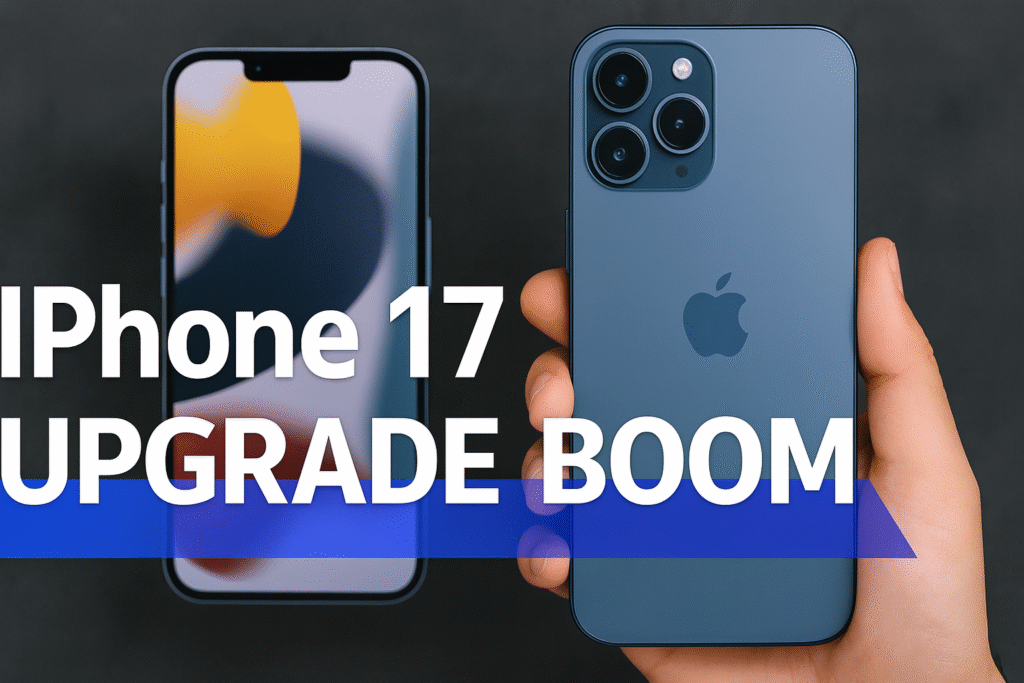
The launch of the iPhone 17 has done more than just grab headlines — it’s set off the largest upgrade wave Apple has seen in years. After several incremental refreshes, the new generation has reignited consumer enthusiasm, sending pre-orders soaring and drawing long lines at retail stores around the world.
Analysts say the iPhone 17’s combination of meaningful hardware upgrades, design refinement, and improved AI-driven performance has convinced millions of users — especially those with older iPhones — to finally make the jump.
⚙️ What makes the iPhone 17 different
Apple’s 2025 flagship lineup introduces its most comprehensive update since the iPhone 12. From design to performance, nearly every core area has been reworked or improved.
Key highlights include:
- Next-generation A19 chip: Built for speed and energy efficiency, offering up to 25% faster performance with better thermal control.
- ProMotion Display across all models: Even the base iPhone 17 now gets the 120Hz refresh rate once exclusive to Pro devices, delivering smoother visuals and better battery optimization.
- Enhanced camera system: A 48MP main sensor, upgraded ultra-wide lens, and smarter night mode powered by Apple’s latest Neural Engine for superior low-light shots.
- Extended durability: The new Ceramic Shield 2 offers greater drop and scratch protection, while improved waterproofing ensures added resilience.
These refinements make the iPhone 17 feel like more than a cosmetic refresh — it’s a genuine leap forward for users holding on to older models.
💰 A long-overdue upgrade cycle
For the past few years, many iPhone owners resisted upgrading, waiting for a truly compelling reason. That reason has finally arrived.
Industry research indicates that nearly half of all iPhone users in the U.S. are upgrading this year — a level of demand not seen since 2019. Apple’s decision to push major features to even the non-Pro variants has played a big role in this resurgence.
Retailers have reported record pre-order volumes, particularly for the standard iPhone 17 and iPhone 17 Pro, prompting Apple to increase production by roughly 30% to meet demand.
“Apple finally delivered the kind of meaningful upgrade consumers have been waiting for,” notes mobile analyst Kara Leighton. “It’s the sweet spot between performance, design, and longevity.”
📈 Apple’s business is seeing the payoff
Apple’s stock has climbed steadily since the iPhone 17’s debut, and analysts project a 4–5% rise in iPhone revenue by early 2026. That may sound modest, but in a mature market where smartphone growth has largely plateaued, it’s a major win.
The ripple effect also benefits Apple’s wider ecosystem — accessories, trade-ins, and subscription services like iCloud and Apple One are seeing higher sign-ups alongside the hardware upgrade boom.
In Asia, especially India, Apple has expanded local production and export operations, signaling that the iPhone 17 cycle could strengthen its global supply chain resilience.
🛍️ Why consumers are upgrading
The appeal isn’t just performance — it’s how Apple has balanced value, design, and longevity.
1. Older devices are reaching their limits
With millions still using iPhone 12 and earlier models, battery degradation and slower chips are driving upgrades.
2. Unified features across the lineup
By offering high-refresh-rate screens, better cameras, and AI features in base models, Apple removed the old “Pro vs Non-Pro” barrier for many consumers.
3. Trade-in and financing programs
Carriers and Apple itself have improved trade-in values and financing, making upgrades financially easier than ever.
4. AI-driven features
The iPhone 17’s AI-powered photo editing, real-time translation, and Siri Smart Context make everyday use smoother and more personalized.
Also read this Apple’s M5 Devices Are Coming: The Next Leap in Silicon Power
🌎 Market impact beyond Apple
Apple’s success has broader implications. The iPhone 17 surge is reviving the global smartphone market after a few slow quarters. Data from the latest IDC report shows global shipments rising by over 2.5% in Q3 2025 — the first positive growth since 2022.
Competitors like Samsung, Google, and OnePlus now face increased pressure to deliver comparable innovation in early 2026, especially as consumer attention shifts back toward premium devices.
This resurgence also stabilizes global suppliers, from chipmakers like TSMC to assembly partners in India and Vietnam, who depend heavily on Apple’s product cycles.
🚧 Challenges Apple still faces
While Apple is enjoying strong demand, it’s not all smooth sailing.
- Supply constraints: Higher-than-expected orders for specific color variants and Pro models have led to shipping delays.
- Economic conditions: Inflation and global economic uncertainty could slow sales in emerging markets.
- Innovation fatigue: Some users feel Apple’s design still looks familiar, even as the internals improve — a sentiment competitors might exploit.
Still, early data suggests that brand loyalty and long-term ecosystem value are outweighing these concerns.
🔮 What comes next: iPhone 17 as the baseline for Apple’s future
The iPhone 17 isn’t just a commercial success — it sets the stage for Apple’s next chapter. Industry insiders believe the company is preparing to integrate foldable technology and more advanced AI chips in the iPhone 18 or later models.
Meanwhile, Apple’s focus on sustainability continues to evolve. The iPhone 17’s components include a higher proportion of recycled materials, and the packaging is entirely plastic-free — moves that resonate with environmentally conscious buyers.
If this momentum continues, the iPhone 17 series could shape Apple’s next decade of innovation strategy.
✅ Final thoughts
The iPhone 17 marks a rare moment when Apple gets almost everything right — design, performance, and value — while reigniting excitement in a market that had begun to cool off.
For Apple fans, this is more than just an annual upgrade; it’s a milestone in the evolution of the world’s most iconic smartphone.
For the industry, it’s proof that meaningful innovation still sells.
In 2025, Apple didn’t just launch a new phone — it rekindled the upgrade era.

Azeem Aosaf is a visionary entrepreneur, digital strategist, and educator with a mission to empower individuals through online earning and digital innovation. As the CEO of HelixNex LLC, he leads multiple ventures across e-commerce, education, and fintech—helping people turn their digital skills into sustainable income. Through his educational initiative RankTrak, Azeem has trained hundreds of students in SEO, YouTube Automation, Freelancing, and AI-powered marketing. His work bridges technology and opportunity—creating a platform where learning meets real-world success. When he’s not mentoring students or building digital products, Azeem shares insights on entrepreneurship, marketing trends, and financial freedom through his blogs and social platforms. His core belief: “Your Growth, Our Mission.”