A week packed with major tech updates
It’s been a busy week in consumer technology. Three key stories are grabbing attention: Samsung’s long-anticipated XR headset appears closer than ever, Google is bringing Wear OS 6 to smartwatches, and Motorola is rolling out the Android 16 update to its latest smartphones.
Let’s break down what these updates mean for users and the wider tech ecosystem.
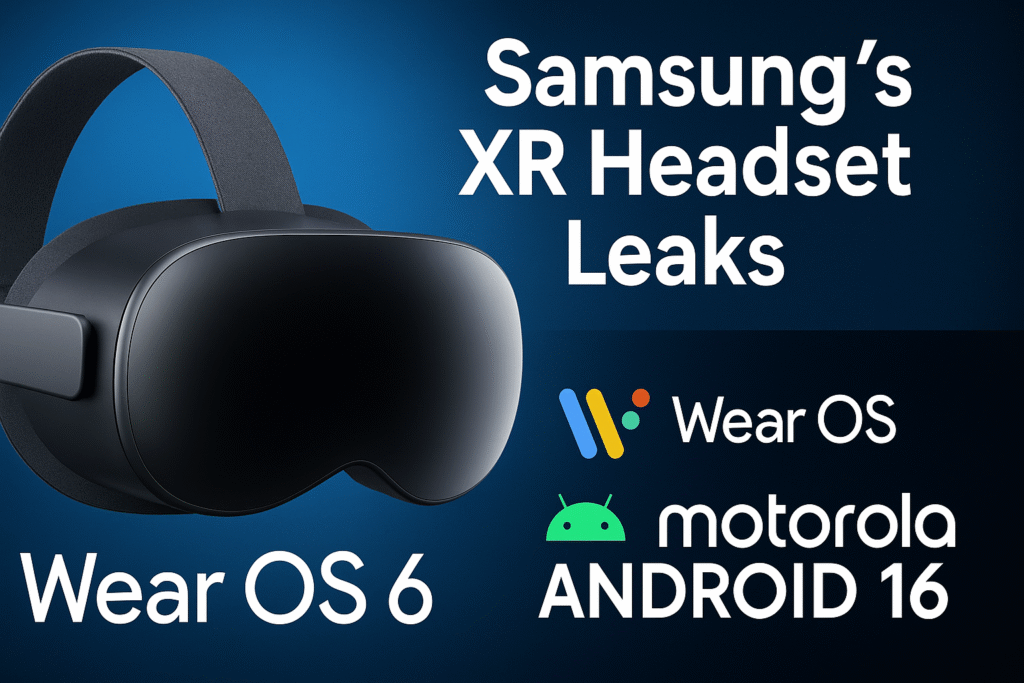
🕶 Samsung’s XR Headset: The Next Big Leap in Spatial Computing
Samsung’s entry into mixed reality is inching closer, as new leaks reveal details of its upcoming XR headset, rumored to carry the Galaxy XR branding.
Early reports suggest Samsung is betting on dual 4K micro-OLED displays and a new Snapdragon XR2+ Gen 2 chip, setting the stage for a true high-end experience. With that level of hardware, the headset could rival the Apple Vision Pro in visual clarity while being slightly lighter — estimated at around 545 grams.
Power may be supplied by an external battery pack designed to extend usage beyond 2 hours, and control options are expected to include eye-tracking, hand gestures, and voice commands.
Read Also This: Apple Redefines Mixed Reality: The Vision Pro Gets the M5 Chip and a Dual Knit Band
Samsung has confirmed the device will run on Android XR, an operating system co-developed with Google and Qualcomm. The official reveal is scheduled for October 21, 2025, at the “Worlds Wide Open” event — and early reservations are already open.
If the leaks hold true, the Galaxy XR could mark Samsung’s return to cutting-edge hardware innovation — an ambitious move to challenge Apple, Meta, and other players in the immersive-tech race.
⌚ Wear OS 6: Google’s Smartwatch Software Evolves
Google’s Wear OS 6 rollout is officially underway, and early adopters are already noticing big visual and functional changes.
The new update brings a redesigned Material 3 Expressive interface, richer animations, and better integration with Android 16. The result is smoother transitions, cleaner layouts, and faster app performance.
Battery life has also seen improvement, thanks to background-process optimizations and smarter resource management.
Samsung is among the first manufacturers to push the update through One UI 8 Watch, starting with the Galaxy Watch 7. The update introduces new features such as:
- Bedtime Guidance and Heart Load Tracking for wellness.
- A dynamic Now Bar displaying active apps and tasks.
- Improved gesture control for hands-free navigation.
The update is currently rolling out in South Korea and is expected to reach global users within weeks. Wear OS 6 marks Google’s biggest smartwatch leap since Wear OS 4 — finally closing the gap between Android and Apple’s watch ecosystems.
📱 Motorola Embraces Android 16: A Long-Awaited Upgrade
Motorola has officially joined the Android 16 club, with its Edge 60 Pro and Edge 50 Fusion models receiving the update first.
This rollout focuses on improving both security and everyday usability. Key highlights include:
- Dynamic UI controls that adapt layouts to user behavior.
- More transparent app-permission tracking.
- Enhanced battery optimization through stricter background control.
- Support for LE Audio, improving sound quality and connectivity for wireless earbuds.
For a brand sometimes criticized for slow software updates, this release is a strong comeback. Android 16 adds smoother animations, greater stability, and more personalization — aligning Motorola with competitors that have already moved to Google’s latest software version.
🌐 Why These Updates Matter
Each of these announcements carries its own significance, but together they signal where tech is headed next:
- Immersive hardware meets refined software. Samsung’s XR device shows that extended reality is moving beyond prototypes into mainstream competition.
- Wearables grow more useful. Google is proving that smartwatches can do more than track steps — they’re becoming extensions of Android phones.
- Consistency across ecosystems. With Android 16 spreading and Wear OS 6 aligning with it, users can expect a more unified experience across phones, watches, and headsets.
These stories collectively point toward a near future where devices communicate seamlessly — one operating system, multiple screens, and a single connected user experience.
🕶️ Samsung’s XR Headset: A Glimpse Into the Future of Reality
Samsung appears ready to make a bold return to extended reality (XR). Leaked renders and insider reports hint at a premium Galaxy XR headset designed to rival Apple’s Vision Pro.
Rumored Highlights:
- Dual 4K micro-OLED displays for lifelike visuals.
- Snapdragon XR2+ Gen 2 chipset, optimized for mixed and augmented reality.
- Eye and hand tracking, voice recognition, and spatial sensors for intuitive navigation.
- A lightweight design (545g) and external battery pack to improve comfort and runtime.
The headset is expected to run Android XR, co-developed by Samsung, Google, and Qualcomm. It’s scheduled for a global reveal at Samsung’s “Worlds Wide Open” event on October 21, 2025.
If these leaks prove accurate, Samsung could redefine immersive tech by blending mobile performance with real-world applications gaming, design, productivity, and beyond.

Azeem Aosaf is a visionary entrepreneur, digital strategist, and educator with a mission to empower individuals through online earning and digital innovation. As the CEO of HelixNex LLC, he leads multiple ventures across e-commerce, education, and fintech—helping people turn their digital skills into sustainable income. Through his educational initiative RankTrak, Azeem has trained hundreds of students in SEO, YouTube Automation, Freelancing, and AI-powered marketing. His work bridges technology and opportunity—creating a platform where learning meets real-world success. When he’s not mentoring students or building digital products, Azeem shares insights on entrepreneurship, marketing trends, and financial freedom through his blogs and social platforms. His core belief: “Your Growth, Our Mission.”